Turning Genetic Concepts Into an Interactive Game: A Look at Genetic Game Development
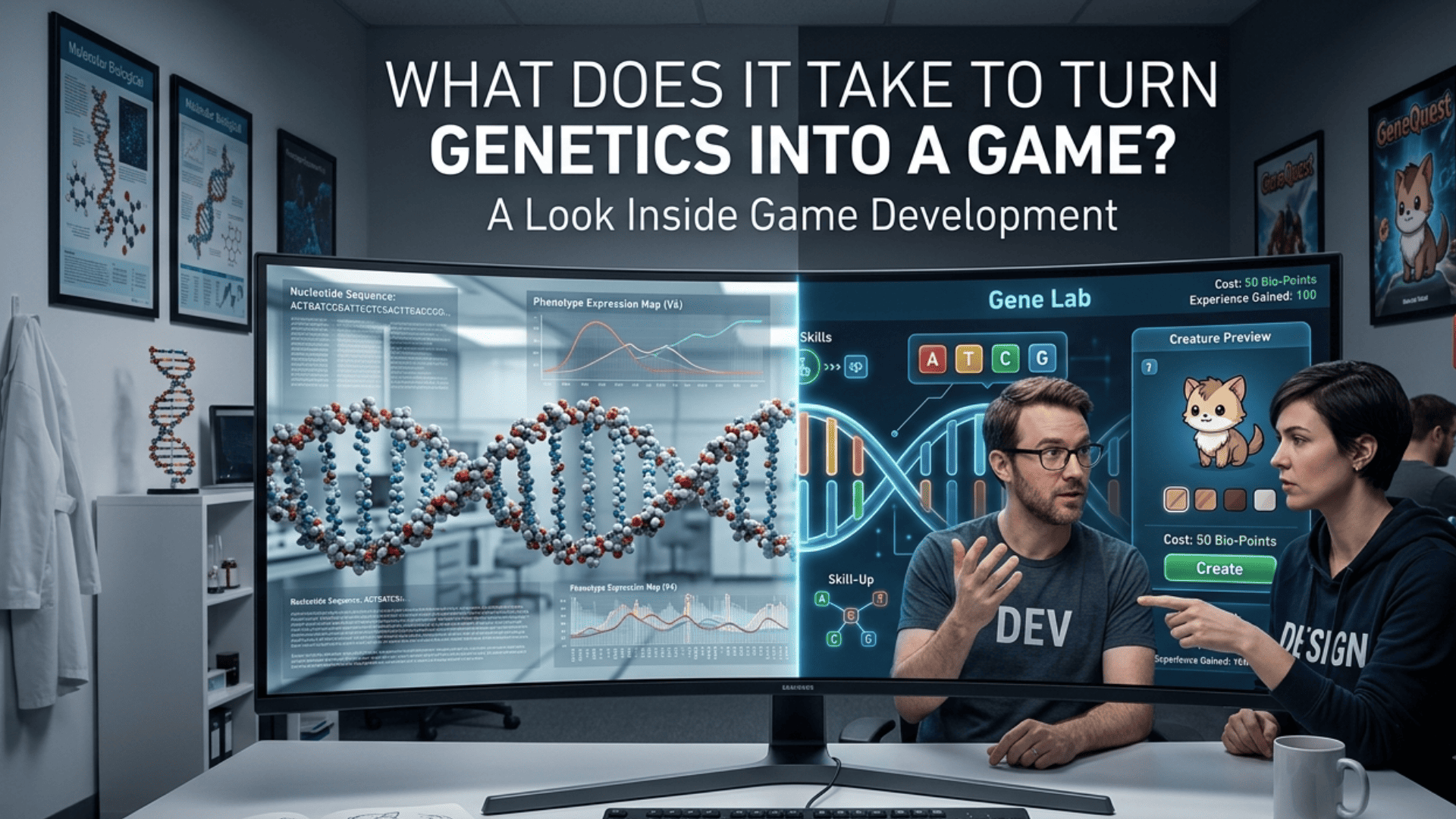
What if learning genetics didn’t have to start with a textbook?
What if students could explore concepts like dominant and recessive traits by interacting with them directly?
That was the idea behind a touchscreen-based genetics game we developed at WEBaniX Solutions. The project was built around a simple but interesting question: Why am I like this?
Genetics can involve concepts that are difficult to understand when they are presented only through definitions and diagrams. Alleles, inheritance, dominant traits, and recessive traits can quickly become abstract concepts for learners.
We wanted to approach the problem differently.
Instead of simply explaining genetic inheritance, the game allowed players to interact with genetic concepts through gameplay. Traits such as eye colour and the ability to roll the tongue became part of an experience where players could explore how different alleles are inherited from their parents.
For us, this project represented an interesting application of genetic game development – combining scientific concepts with interactive technology to create a learning experience.
But turning a scientific concept into an engaging game wasn’t as straightforward as it sounds.
The Challenges We Faced
1. Turning Genetic Inheritance Into Gameplay
One of the biggest challenges in this game development project was translating genetic concepts into something players could actually interact with.
Explaining the difference between dominant and recessive traits is relatively simple in theory. Creating a gameplay mechanic that helps players understand those concepts through interaction requires a different approach.
We needed the genetic logic to remain accurate while making the gameplay intuitive enough that players could understand what they were doing without relying on lengthy explanations.
The challenge was to find the right balance between educational accuracy and interactive gameplay.
2. Creating Touch-Based Interaction on Windows
The game was designed to run on Windows while also supporting human touch inputs.
This meant the experience couldn’t simply behave like a conventional desktop game. Players needed to be able to physically interact with elements on the screen and receive responsive feedback.
Creating that interaction layer within a Windows-based gaming environment required us to consider how touchscreen inputs would translate into actions inside the game.
The interaction needed to feel natural rather than like a traditional mouse-and-keyboard experience adapted to a touchscreen.
3. Building Accurate Allele-Matching Mechanics
Another important part of the project was developing the logic behind allele combinations.
Players needed to work with different allele combinations as part of the gameplay. This meant the game required an accurate matching system capable of handling the genetic logic represented within the experience.
At the same time, the system couldn’t become so complicated that it disrupted gameplay.
The underlying algorithms had to manage the complexity while presenting players with an interaction that remained simple and understandable.
How We Solved Them
1. Designed a Guided Introduction to the Game
We created a working demo and a guided cutscene to introduce players to the game mechanics.
Rather than leaving players to discover everything on their own, the introductory experience demonstrated how different elements worked and showed them how they could interact with the game.
The guided experience also helped establish the connection between genetic traits and allele combinations before players moved into the core gameplay.
This approach allowed the educational objective to become part of the experience itself instead of functioning as a separate explanation.
It also reflected an important principle of educational game development: the learning objective needs to be connected naturally with the way the player interacts with the game.
2. Used Unity to Enable Touch Interaction
We used the Unity Engine to incorporate human touch inputs into the Windows-based game.
Unity provided the foundation for connecting physical touchscreen interactions with actions inside the game. This allowed us to create an interaction layer that responded to the player’s touch while maintaining the overall gameplay experience.
The objective wasn’t simply to make the game compatible with a touchscreen. It was to make touch a natural part of how players experienced the game.
For a project involving game development services, technical implementation and user interaction need to work together. In this case, the technology supported the educational objective rather than becoming a separate layer of the experience.
3. Developed Algorithms for Allele Matching
The allele-matching system required more than basic game logic.
We developed algorithms to manage the different allele combinations represented in the game and determine how those combinations interacted with one another.
The algorithms connected the genetic rules with player actions, allowing the outcome of an interaction to reflect the underlying genetic concepts.
This was an important part of the project because it transformed genetics from information displayed on a screen into something players could actively explore.
The Results
The development process resulted in an interactive educational gaming experience that brought together scientific concepts, touchscreen interaction, and game mechanics.
The project delivered:
- Responsive touchscreen interaction for a smoother Windows-based experience.
- Interactive learning mechanics that allowed players to explore genetic concepts through gameplay.
- Accurate allele-matching logic connecting gameplay actions with genetic inheritance.
- Guided gameplay that helped players understand the mechanics before entering the core experience.
- More fluid animations that supported the overall gameplay experience.
- A foundation for combining education and game development into an engaging interactive format.
The result wasn’t simply a game that contained information about genetics. The genetic concepts became part of the way the game worked.
What This Project Taught Our Team
Projects like this remind us that game development doesn’t always begin with entertainment.
Sometimes, it begins with a question:
How can technology make a complicated idea easier to understand?
In this project, the answer was interaction.
Instead of asking players to remember genetic concepts from static explanations, we created an environment where they could interact with allele combinations and see those concepts represented through gameplay.
For our team at WEBaniX Solutions, the project demonstrated how game development services can be applied beyond conventional entertainment-focused experiences. Software, algorithms, interaction design, and game mechanics can come together to create experiences around complex subjects.
And that’s what makes genetic game development particularly interesting.
You’re not simply building screens, mechanics, or algorithms. You’re figuring out how all of those elements can work together to communicate something.
Whether the subject is genetics, science, training, or another complex concept, the right interactive experience can change the way people engage with it.
For organizations exploring educational game development, the key question may not simply be what technology to use. It may be how technology can make the intended learning experience more interactive, understandable, and engaging.
If you were building an educational game, what would you focus on first — making the concept easier to understand or making the gameplay more engaging?
Build Your Interactive Game With WEBaniX
Have an idea for an educational game, interactive experience, or custom gaming solution?
At WEBaniX Solutions, we bring together game development expertise and custom software development capabilities to turn concepts into interactive digital experiences and let’s build your idea into an engaging game experience.