Case Study
Transforming Field Service Operations Through a Centralized Service CRM and Mobile Workflow
Industry
Manufacturing
Platform
Integrated Workflow System, Node JS, React JS
Behind the Scenes
Custom Software, System Integration, Workflow Automation
Client Overview
Managing field service operations becomes increasingly complex when customer information, dealer networks, service partners, engineers, tickets, spare dependencies, approvals, and service reports are handled across disconnected processes.
The organization needed a centralized system to bring its service operations together and provide greater visibility into the complete service lifecycle. To address these operational requirements, WebaniX developed a comprehensive Service CRM platform supported by a dedicated field service mobile application.
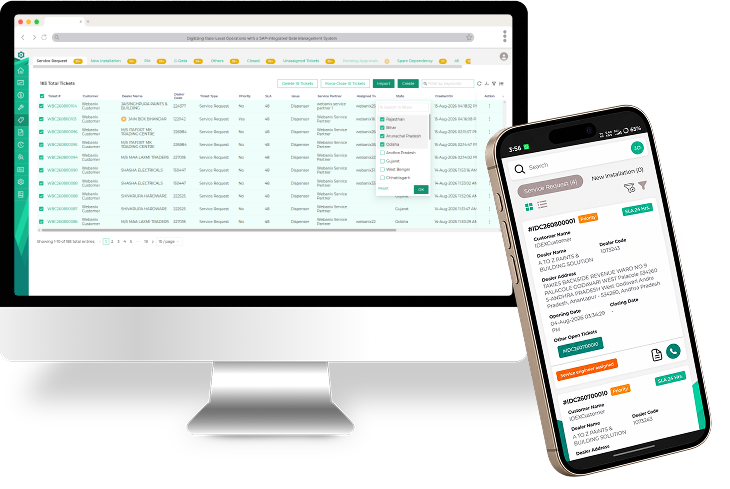
The solution centralized customer and service partner management, dealer information, service tickets, SLA tracking, approvals, spare dependencies, reporting, user management, and service engineer activities within a connected digital ecosystem. The mobile application further enabled field engineers to access assigned tickets, update service statuses, upload supporting documents, and track service requests directly from the field.
This created a more structured approach to managing service operations, from ticket assignment and engineer action to service completion and closure.


Challenges
- Service operations involved multiple stakeholders, including customers, dealers, service partners, service coordinators, and field engineers, making centralized coordination essential.
- Service tickets covered different categories such as new installations, service requests, preventive maintenance and calibration checks, requiring structured classification and tracking.
- Ticket assignment and status updates needed better visibility to ensure that service engineers could act on requests according to their responsibilities and SLA requirements.
- Service information, dealer details, machine information, documents, photos, and videos need to be accessible within the relevant service workflow.
- Pending approvals and spare dependencies could affect ticket resolution and require dedicated workflows for monitoring and follow-up.
- Reporting activities involved SLA, service, installation, dealer creating a need for centralized reporting and scheduled report generation.
- Managing internal users, customer users, service partners, roles, permissions, and configurations required a structured administrative system.
- Field engineers needed a mobile solution to access tickets and update service activities while working on-site.
Root Cause
- Service processes required coordination across multiple operational stakeholders without a single platform connecting the complete workflow.
- Ticket information and service activities required structured categorization, assignment, status tracking, and historical visibility.
- Approval-dependent and spare-dependent tickets required dedicated workflows to prevent service activities from becoming difficult to track.
- Reporting requirements involved multiple service and operational data points that needed to be organized within a centralized reporting environment.
- Administrative activities such as assigning user, role, state, and holiday configuration required centralized control.
- Field engineers required direct access to service information and ticket actions without depending entirely on the web-based system.
Solutions
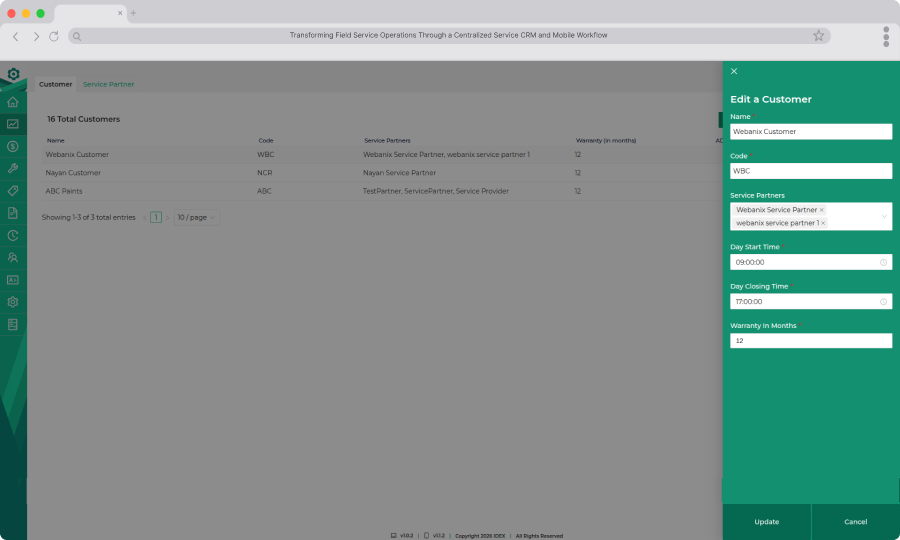
- WebaniX developed a centralized Service CRM platform to manage customers, service partners, dealers, tickets, approvals, reporting, users, roles, and operational configurations from a unified environment.
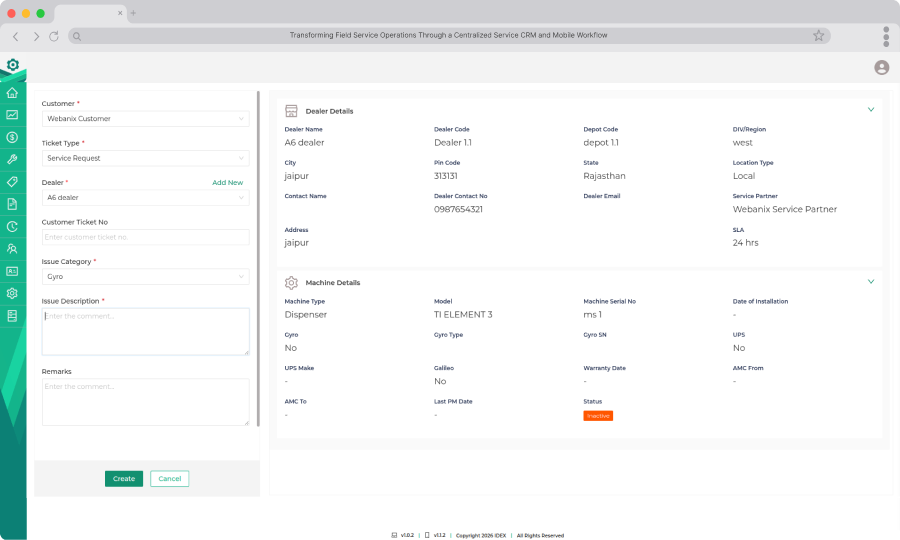
- A comprehensive ticket management workflow was implemented to handle new installations, service requests, preventive maintenance, closed tickets, unassigned tickets, pending approvals, and spare-dependent tickets.
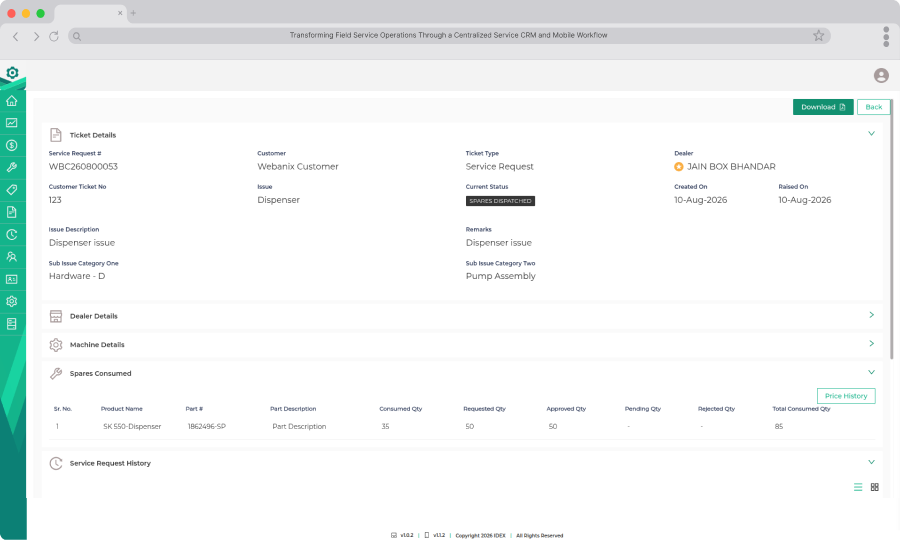
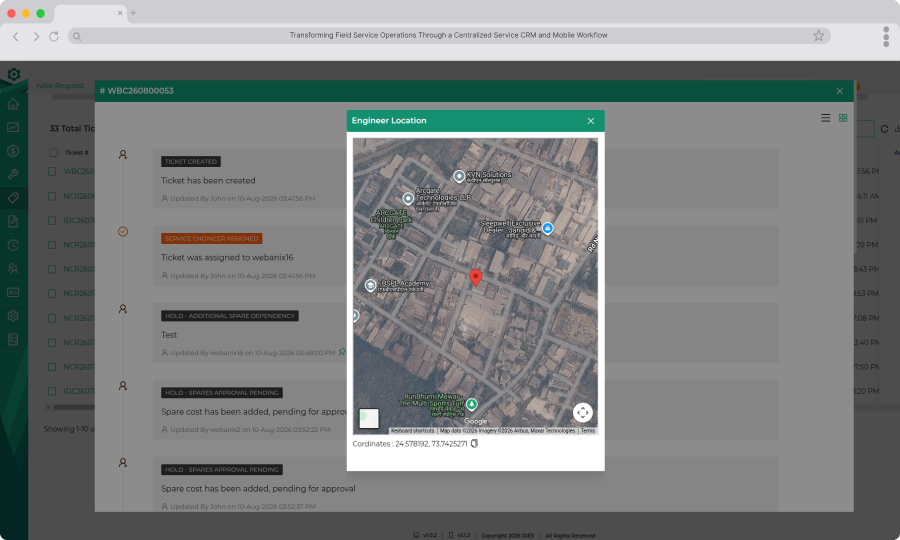
- The platform introduced structured ticket assignment and status tracking, allowing teams to monitor ticket progress, review timelines, reassign engineers where permitted, and maintain service history.
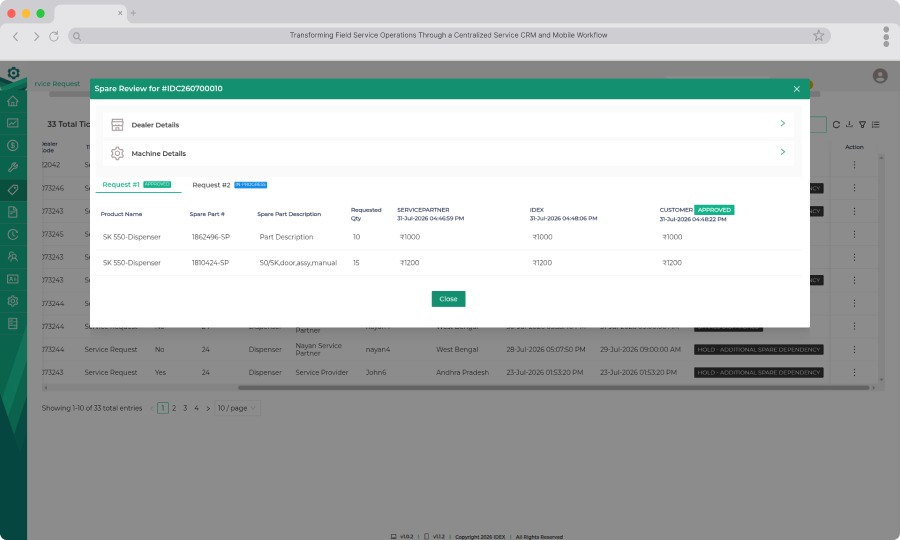
- Dedicated workflows were introduced for pending approvals and spare dependencies, enabling teams to monitor approval decisions, spare dispatches, and ticket progression through resolution.
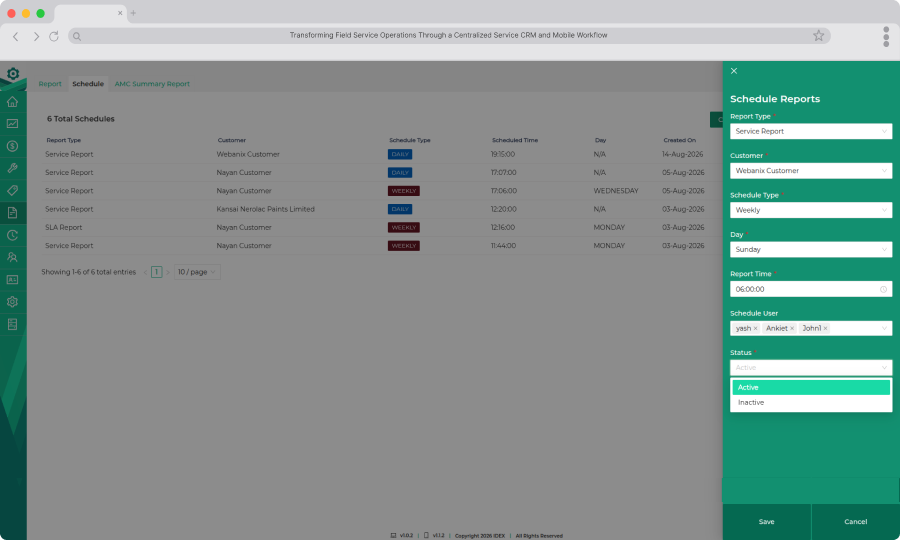
- Centralized reporting capabilities enabled users to generate SLA, service, installation, yearly dealer, active asset, installation cost, and AMC summary reports, while scheduled reporting supported recurring information delivery.
- A dedicated field service mobile application was developed to help service engineers access assigned tickets, update statuses, manage service information, and upload relevant documents and videos from the field.
Key Capabilities
- Centralized Service CRM: A unified platform for managing customers, service partners, dealers, tickets, users, approvals, reports, and configurations.
- End-to-End Ticket Management: Structured handling of installation, service, preventive maintenance, G-Data, calibration, approval, and spare-dependent tickets.
- Real-Time Ticket Visibility: Teams can view ticket status, assignment details, SLA information, service history, and ticket timelines.
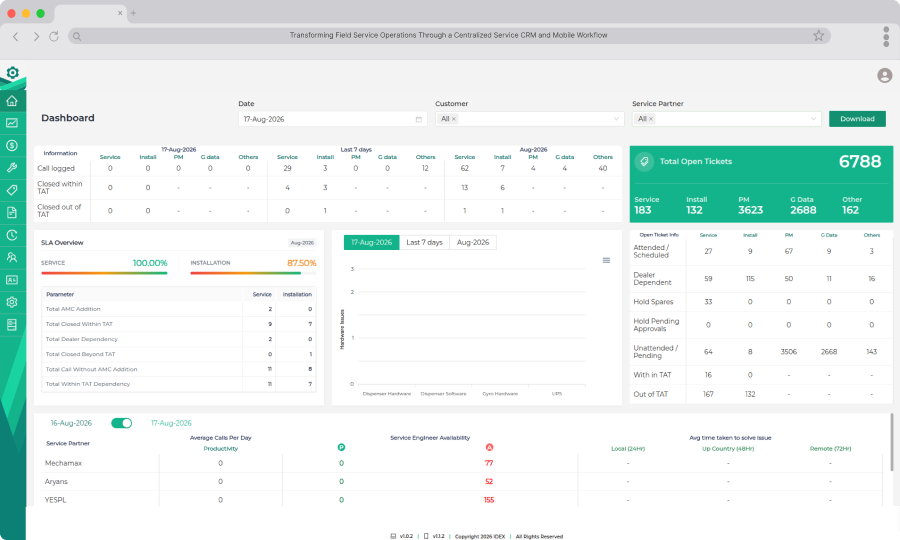
- SLA Tracking: Dashboard and reporting capabilities provide visibility into service and installation SLA performance.
- Engineer Assignment & Reassignment: Tickets can be assigned to service engineers, with reassignment capabilities available according to user permissions.
- Approval Workflows: Dedicated approval processes support AMC reviews and other pending approval activities before ticket progression.
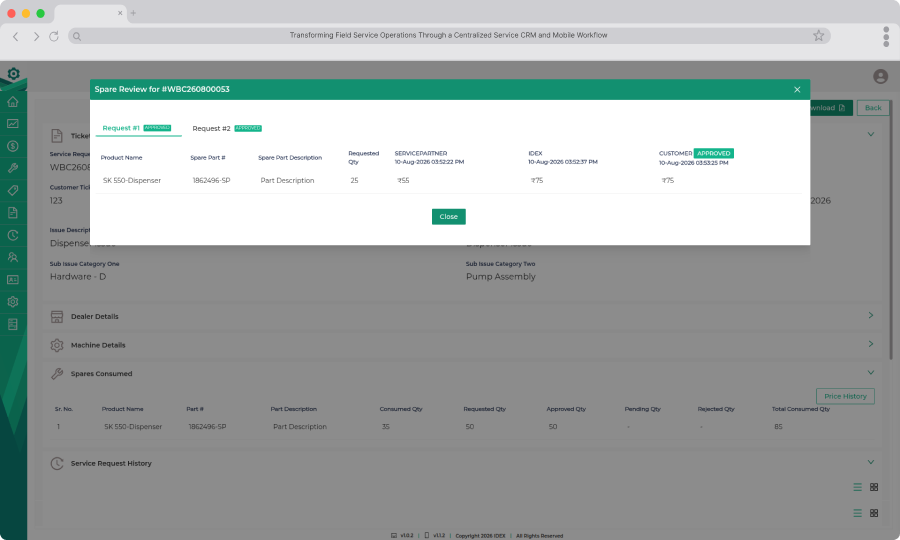
- Spare Dependency Management: Teams can monitor spare requests, approvals, dispatches, and service continuation after spare receipt.
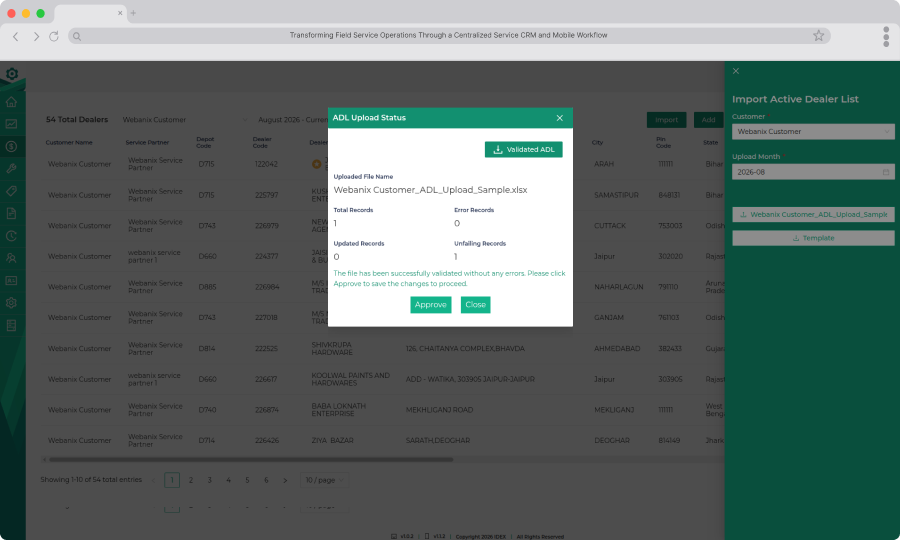
- Dealer Management: Dealer information can be imported, added, filtered, updated, and associated with relevant customers and service partners.
- Centralized Reporting: Users can generate and download multiple operational reports and create recurring report schedules.
- Audit Logs: System activities can be recorded with information about the action, user, organization, and date, supporting greater operational traceability.
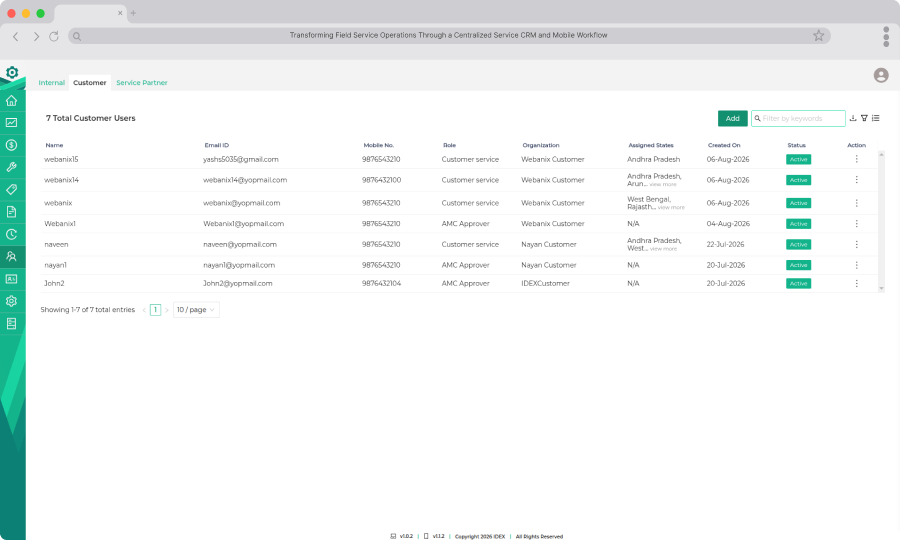
- Role-Based User Management: Internal, customer, and service partner users can be managed with defined roles and access controls.
- Configurable Service Operations: Issue categories, spare configurations, products, product rates, states, holidays, and other operational parameters can be managed from the platform.
- Field Service Mobile App: Engineers can view assigned tickets, access dealer and machine details, update service statuses, and upload photos and videos directly from the field.
Key Capabilities
- SAP-Integrated Order Processing: All orders—B2B and B2C—flowed into SAP in real time.
- Fast & Seamless Digital Experience: Optimized checkout and order management workflows
- Distributor-Friendly Architecture: Ensured channel harmony while expanding digital reach

Measurable Business Impact
The implementation of the centralized Service CRM and field service application established a more connected and structured approach to service operations.
Operational Efficiency
The platform brought ticket creation, assignment, service execution, approvals, spare dependencies, and closure into a structured workflow, reducing the need to manage these activities through disconnected processes.
Service Visibility
Centralized dashboards, ticket statuses, timelines, SLA information, and service history provided teams with greater visibility into the progress of service requests and enabled them to identify tickets requiring attention.
Customer Experience
Automated acknowledgements, order updates, and process visibility enhanced customer responsiveness, transparency, and overall client satisfaction.
UI Designs
We designed a structured and intuitive interface focused on service visibility, operational control, and ease of navigation. The CRM dashboard provides an overview of ticket volumes, SLA performance, ticket distribution, and service trends, while dedicated modules allow users to manage customers, dealers, tickets, reports, users, roles, and configurations.
The field service mobile application extends this experience to service engineers, enabling them to access assigned tickets, review dealer and machine information, update ticket statuses, manage service requests, and upload supporting documents and videos directly from the field.
Strategic Outcome
The implementation of the Service CRM transformed service management from a collection of operational activities into a connected digital workflow.
Teams gained a centralized view of customers, dealers, service partners, tickets, approvals, spare dependencies, reports, and service activities. At the same time, field engineers gained mobile access to the information and actions required to execute service requests effectively.
The platform also established a stronger foundation for service monitoring through SLA visibility, ticket history, audit logs, structured reporting, and configurable operational workflows.
By connecting the administrative and field-service sides of the operation, the solution created a more transparent, traceable, and organized service management ecosystem.
The Biggest Win
The biggest win was connecting the complete service lifecycle through one centralized platform and extending it to the field through a dedicated mobile application.
From customer and dealer management to ticket assignment, engineer actions, approvals, spare dependencies, service updates, reporting, and closure, the system created a connected workflow across the different stakeholders involved in service delivery.
Service engineers could work directly from the mobile application, while administrators and service teams could maintain broader visibility through the CRM. This combination helped bridge the gap between centralized service management and on-the-ground execution.
Technology Stack & Delivery
Technology

React.js

Node.js with REST APIs

Integrated Workflow Automation System
Delivery Timeline

20 Weeks
Confidentiality

Masked