AI in Supply Chain: Top Use Cases and Applications
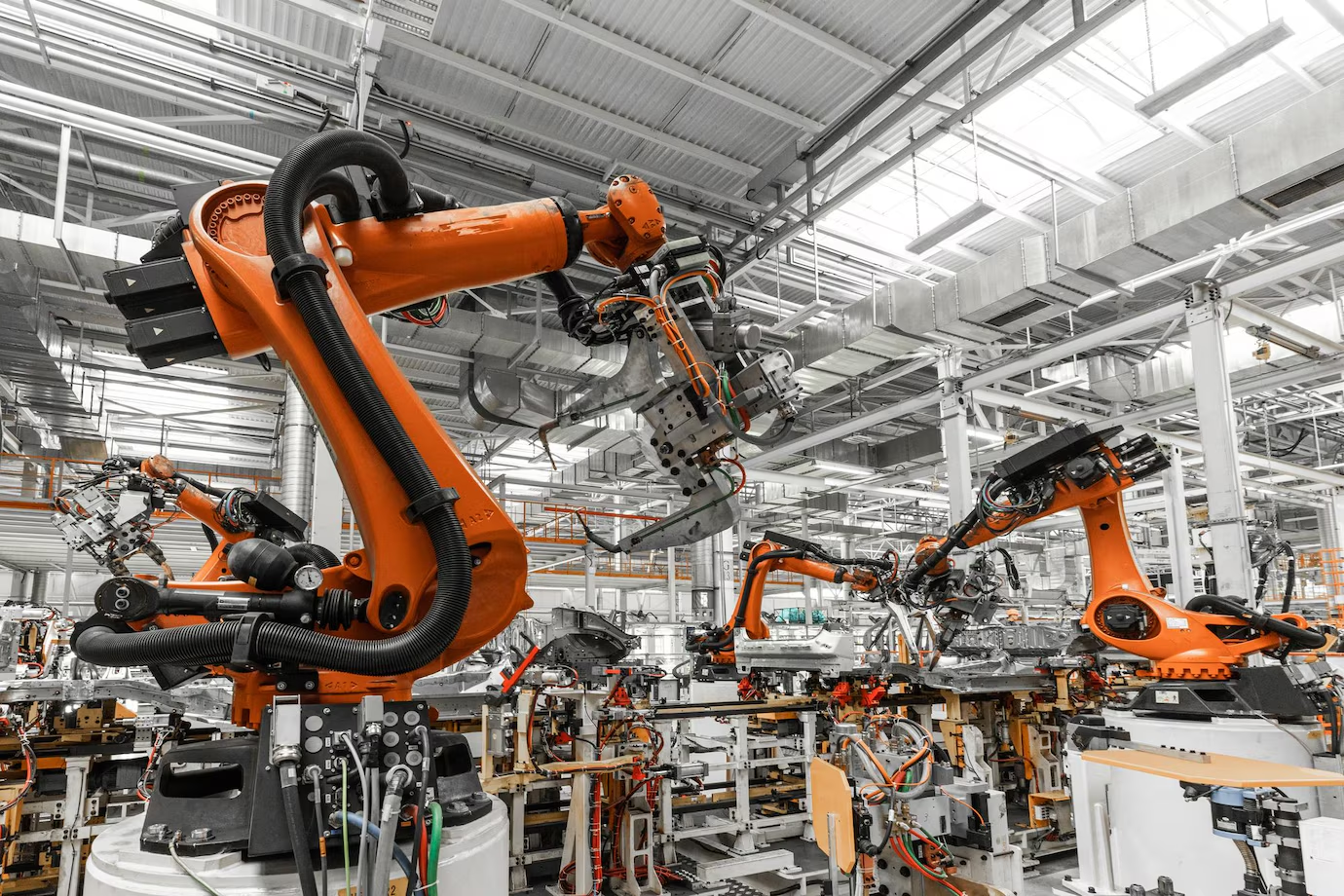
The supply chain is the backbone of global commerce, connecting raw materials to finished products in consumers’ hands. In this intricate network, Artificial Intelligence (AI) is emerging as a game-changer, driving efficiency, reducing costs, and enabling smarter decision-making. Here’s a deep dive into how AI is transforming supply chains across industries.
Why AI in Supply Chains is Crucial
The global supply chain landscape is more complex than ever, with businesses facing challenges like fluctuating demand, increasing customer expectations, and disruptions caused by geopolitical events or natural disasters. Traditional supply chain systems, relying heavily on manual processes and static forecasts, often fail to keep up with these demands.
AI steps in as a transformative force by providing real-time insights, automating repetitive tasks, and predicting outcomes with unmatched accuracy. By leveraging AI, companies can not only improve operational efficiency but also enhance their ability to respond to unforeseen events swiftly.
To understand the practical implications, let’s explore some top use cases of AI in supply chain management.
1. Demand Forecasting
AI excels in analyzing historical sales data, market trends, and external factors like weather or economic conditions to predict future demand. By using AI in supply chain models, companies can:
- Minimize overstock and understock scenarios.
- Align production schedules with consumer needs.
- Improve cash flow by optimizing inventory levels.
For instance, retail giants like Amazon and Walmart use AI-powered supply chain monitoring and demand forecasting to anticipate customer preferences and ensure product availability.
2. Inventory Optimization
Balancing inventory levels is one of the biggest challenges in supply chain management. AI helps by:
- Providing real-time inventory insights.
- Automating stock replenishment decisions.
- Predicting inventory needs based on demand trends and seasonality.
For example, AI-enabled systems in warehouses can flag slow-moving items and recommend promotions to clear them, ensuring optimal stock levels.
3. Smart Warehousing
AI-powered robotics and automation are revolutionizing warehouse operations. Robots equipped with AI can:
- Pick, pack, and sort items more efficiently.
- Navigate warehouses autonomously to fulfill orders faster.
- Reduce human errors in inventory handling.
Companies like DHL and Alibaba are investing heavily in AI-driven warehouses where robotic arms and autonomous vehicles seamlessly manage logistics.
4. Transportation and Route Optimization
AI is optimizing transportation by analyzing traffic patterns, weather conditions, and delivery constraints. This results in:
- Reduced fuel costs.
- Faster delivery times.
- Improved vehicle utilization.
Logistics companies such as FedEx and UPS use AI-driven route optimization tools to enhance last-mile delivery efficiency while reducing their carbon footprint.
5. Supplier Relationship Management
AI tools analyze supplier performance data to ensure quality, timely deliveries, and cost-effectiveness. These insights help businesses:
- Identify reliable suppliers.
- Mitigate risks by predicting potential supply chain disruptions.
- Negotiate better terms based on data-driven insights.
Automotive companies, for example, use AI to manage complex supplier networks and ensure consistent parts availability.
6. Quality Control and Defect Detection
AI-powered visual inspection systems are transforming quality control processes in manufacturing and supply chains. These systems:
- Detects defects in products with high accuracy.
- Reduce reliance on manual inspections.
- Ensure compliance with quality standards.
This is particularly beneficial in industries like electronics and pharmaceuticals, where precision and consistency are critical.
7. Risk Management
AI is pivotal in predicting and mitigating supply chain risks. By analyzing data from multiple sources, such as news articles, social media, and supplier reports, AI can:
- Identify potential disruptions (e.g., natural disasters, geopolitical issues).
- Provide early warnings to stakeholders.
- Recommend contingency plans to maintain operational continuity.
During the COVID-19 pandemic, companies using AI for risk management were better equipped to handle supply chain disruptions.
8. Sustainability Initiatives
Sustainability is becoming a key focus in supply chain management. AI helps organizations reduce their environmental impact by:
- Optimizing transportation routes to lower emissions.
- Identifying energy-efficient manufacturing processes.
- Tracking and reporting on carbon footprints.
For instance, Unilever leverages AI to monitor its supply chain’s sustainability metrics, ensuring alignment with its eco-friendly goals.
9. Fraud Detection
AI enhances supply chain security by identifying anomalies in transactions and shipments. This helps businesses:
- Prevent counterfeit goods from entering the supply chain.
- Detect financial fraud in procurement processes.
- Safeguard intellectual property.
Blockchain technology combined with AI further strengthens the traceability and security of supply chains.
10. Customer Experience Enhancement
AI-powered chatbots and virtual assistants are improving customer satisfaction by providing real-time order updates, answering queries, and resolving issues. Additionally, AI helps:
- Customize product recommendations based on purchase history.
- Ensure transparency in delivery timelines.
- Foster loyalty through personalized interactions.
E-commerce platforms widely use AI-driven tools to keep customers informed and engaged throughout the delivery process.
Manual process VS AI-Enhanced Supply Chain
Traditional supply chains often face inefficiencies, delays, and limited visibility. In contrast, AI-powered supply chains enable automation, accuracy, and agility—turning operations from reactive to proactive.
Below is the table where we compare manual supply chains with AI-enhanced supply chains across key aspects:
| Aspect | Manual Supply Chain (Traditional) | AI-Enhanced Supply Chain |
| Demand Forecasting | Relies on historical data & guesswork, often inaccurate | Uses predictive analytics & machine learning for highly accurate demand forecasts |
| Inventory Management | Prone to overstock/understock due to static planning | Real-time tracking & automated replenishment ensure optimal stock levels |
| Warehouse Operations | Labor-intensive, slower, higher risk of human error | AI-powered robotics & automation streamline picking, packing, and sorting |
| Transportation & Routes | Manual route planning; delays due to traffic/weather overlooked | AI analyzes traffic, weather, and delivery constraints for optimized, cost-effective routing |
| Supplier Relationship | Manual vendor checks; risk of delays & poor-quality suppliers | AI evaluates supplier performance & predicts risks for better partnerships |
| Risk Management | Reactive approach; disruptions caught late | Proactive AI-driven alerts & contingency planning for resilience |
| Quality Control | Manual inspections; slower & inconsistent | AI-driven visual inspection ensures precision and consistency |
| Decision-Making Speed | Time-consuming, based on limited data | Real-time insights for faster, smarter decisions |
| Cost & Efficiency | Higher costs due to inefficiencies & errors | Reduced costs with automation, improved accuracy, and agility |
5 Signs Your Supply Chain Needs AI
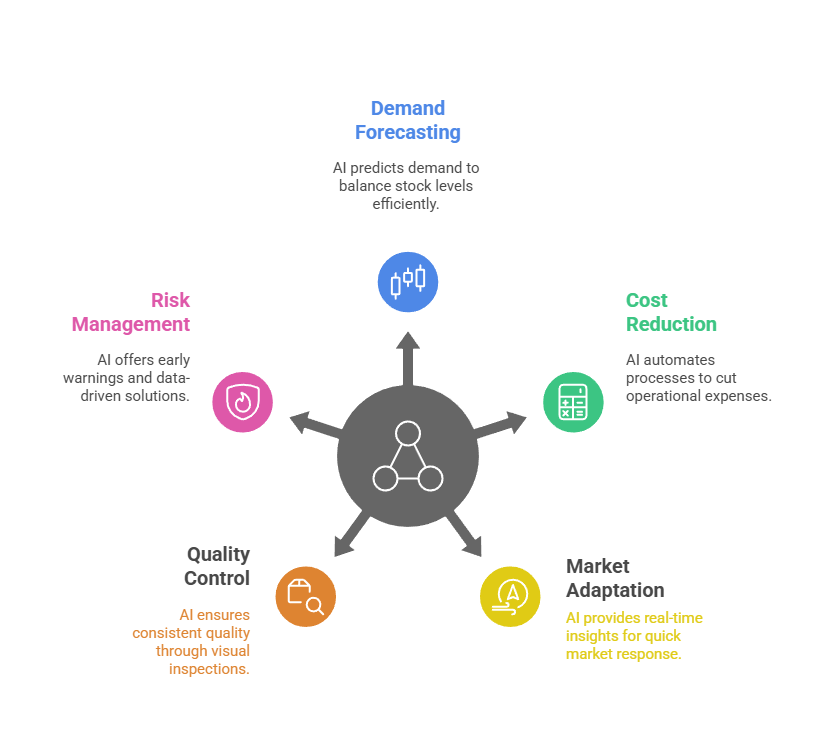
A traditional supply chain may keep things moving, but hidden inefficiencies can hold back growth. When delays, errors, and rising costs become frequent, it’s a clear signal that smarter solutions are needed. Here are five signs your supply chain is ready for AI transformation:
1. Frequent Stockouts or Overstocking
If your business often struggles with excess inventory or product shortages, it’s a clear sign manual forecasting isn’t keeping up. AI-driven demand forecasting can help balance stock efficiently.
2. High Operational Costs
Rising costs from inefficient warehousing, transportation delays, or excessive labor suggest that automation and AI can streamline processes and cut expenses.
3. Slow Response to Market Changes
Inability to adapt quickly to sudden demand shifts, supply disruptions, or customer needs signals the need for AI-powered real-time insights and predictive analytics.
4. Inconsistent Quality Control
If manual inspections miss defects or slow down production, AI-based visual inspection tools can ensure accuracy, consistency, and compliance with quality standards.
5. Poor Visibility & Risk Management
If you lack visibility into supplier risks, route bottlenecks, or potential disruptions, AI can provide early warnings, proactive solutions, and data-driven decision-making.
Harness the Power of AI in Supply Chain Excellence
AI is fundamentally reshaping the supply chain landscape, offering companies the tools they need to enhance efficiency, reduce costs, and build more resilient, agile operations. By implementing AI across various areas—demand forecasting, inventory optimization, smart warehousing, and beyond—organizations can unlock new levels of productivity and customer satisfaction. The future of supply chains lies in harnessing these intelligent solutions to stay ahead in a rapidly evolving market.
If you’re ready to take your supply chain to the next level with AI-driven solutions, WEBaniX is here to help. As a leading IT consulting company, we specialize in using cutting-edge technologies to streamline processes and drive business transformation. Whether it’s custom software, mobile apps, or intelligent data solutions, our team is committed to delivering tailored solutions that align with your specific business needs.
Get in touch with us today to learn how we can help you revolutionize your supply chain operations and achieve lasting success.
FAQs on AI in Supply Chain
1. What is AI in supply chain?
AI in supply chain refers to the use of artificial intelligence technologies—such as machine learning, predictive analytics, and automation—to improve planning, operations, and decision-making. It helps businesses forecast demand more accurately, optimize inventory, streamline logistics, and reduce costs while increasing efficiency.
2. Which supply chain processes benefit most from AI?
AI benefits multiple supply chain processes, including demand forecasting, inventory management, warehouse automation, route optimization, supplier risk assessment, quality control, and predictive maintenance. These applications help improve accuracy, reduce delays, and make operations more resilient.
3. How do I begin integrating AI into my supply chain?
To integrate AI into your supply chain, start by identifying pain points such as forecasting errors, inventory imbalances, or transportation inefficiencies. Then, choose AI-powered tools or partner with a technology provider like WEBaniX to design and implement tailored solutions. Begin with small, high-impact projects before scaling AI across your entire supply chain.