Case Study
Streamlining Warranty Evaluation Through a Centralized Unit Tracking and Evaluation Platform
Industry
Manufacturing
Platform
Integrated Workflow System, Node JS, React JS
Behind the Scenes
Custom Software, System Integration, Workflow Automation
Client Overview
- Incoming warranty units needed to be accurately identified and tracked from receipt through the evaluation process.
- Unit and crate information needs to be captured consistently to maintain traceability.
- Warranty files needed to be uploaded, organized, and associated with the relevant customer and operational records.
- Evaluation activities involved multiple inspection and testing steps that needed to follow a structured workflow.
- Units could move through different processing stages, making centralized status visibility essential.
- Teams needed access to the complete history of activities performed on individual units.
- Completed evaluation records required controlled editing to protect data accuracy and process integrity.
- Operational teams needed an easier way to generate reports and manage recurring reporting requirements.
- Different users required different levels of access depending on their responsibilities.
- Administrative information such as products, fault categories, and other evaluation parameters needs to be centrally managed.


Challenges
- Service operations involved multiple stakeholders, including customers, dealers, service partners, service coordinators, and field engineers, making centralized coordination essential.
- Service tickets covered different categories such as new installations, service requests, preventive maintenance and calibration checks, requiring structured classification and tracking.
- Ticket assignment and status updates needed better visibility to ensure that service engineers could act on requests according to their responsibilities and SLA requirements.
- Service information, dealer details, machine information, documents, photos, and videos need to be accessible within the relevant service workflow.
- Pending approvals and spare dependencies could affect ticket resolution and require dedicated workflows for monitoring and follow-up.
- Reporting activities involved SLA, service, installation, dealer creating a need for centralized reporting and scheduled report generation.
- Managing internal users, customer users, service partners, roles, permissions, and configurations required a structured administrative system.
- Field engineers needed a mobile solution to access tickets and update service activities while working on-site.
Root Cause
- The primary challenge was the absence of a unified system connecting the different stages of warranty unit management.
- Unit identification, warranty information, inspection activities, testing, evaluation results, reporting, and administrative controls all formed part of the same operational process, but required centralized coordination to maintain consistency and traceability.
- Without a connected workflow, teams can face difficulties in understanding the current status of a unit, reviewing its previous activities, maintaining accurate records, and ensuring that only authorized users can modify completed information.
- A centralized digital platform was therefore required to establish a single source of truth for warranty evaluation operations.
Solutions
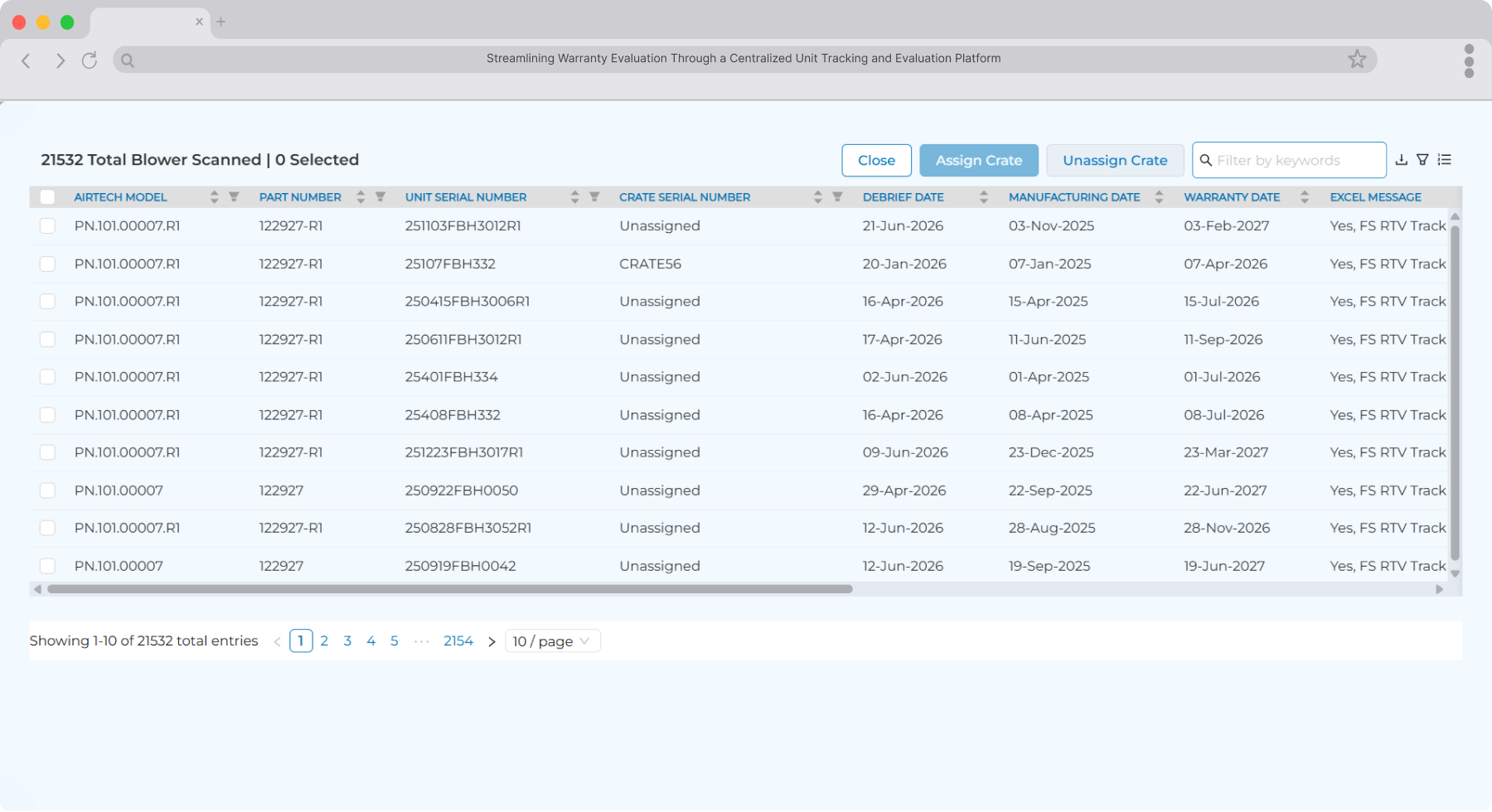
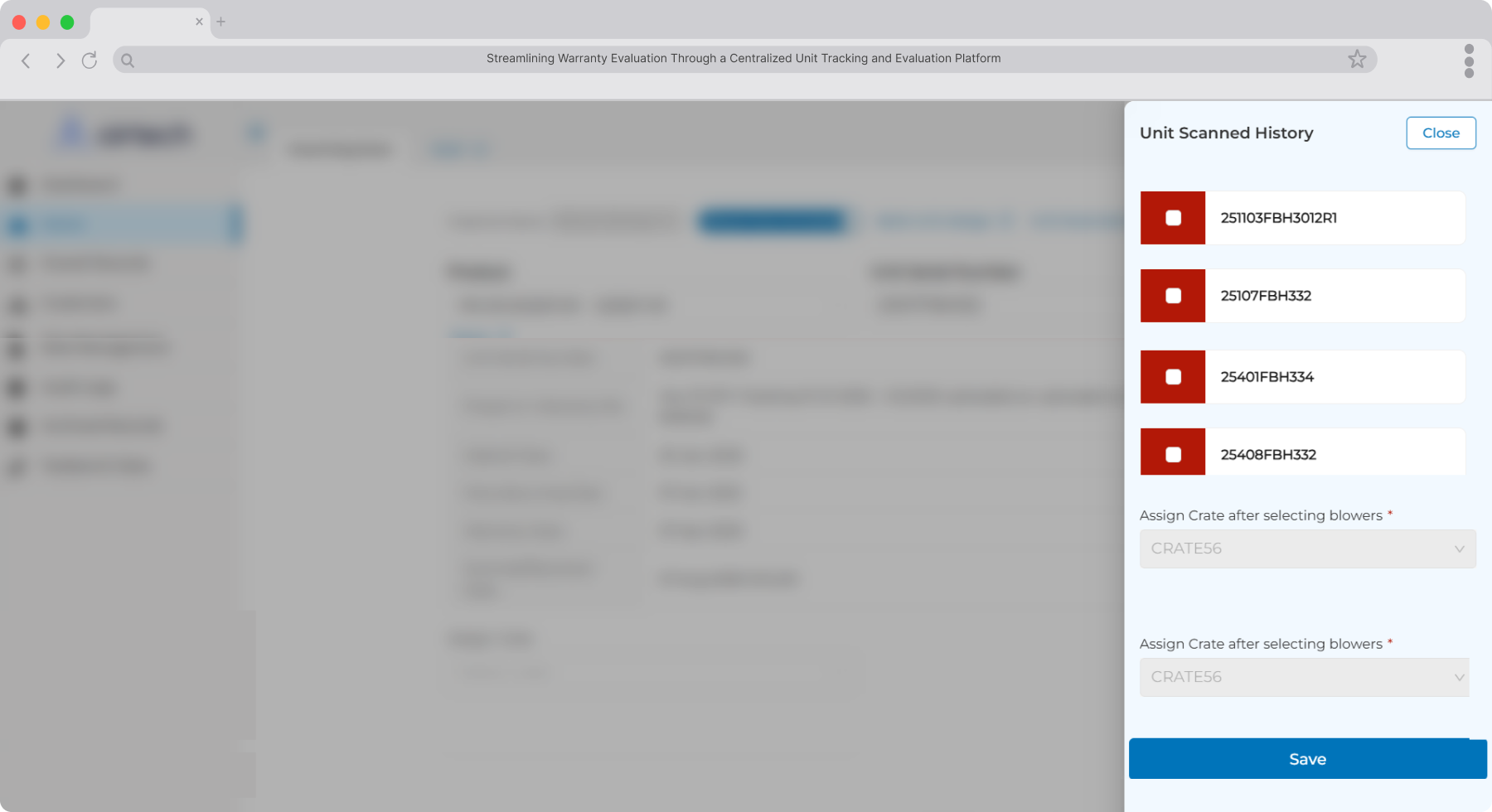
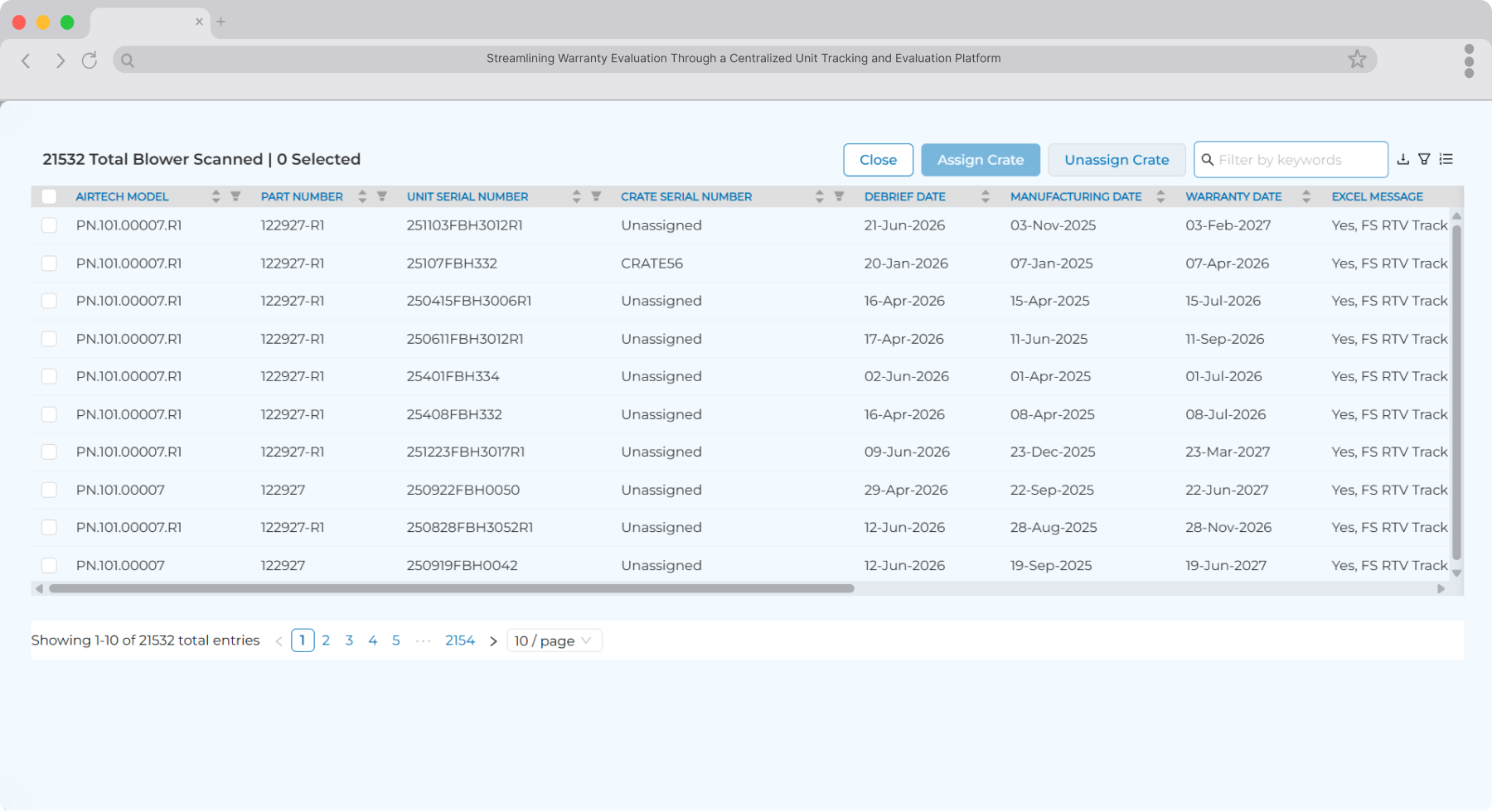
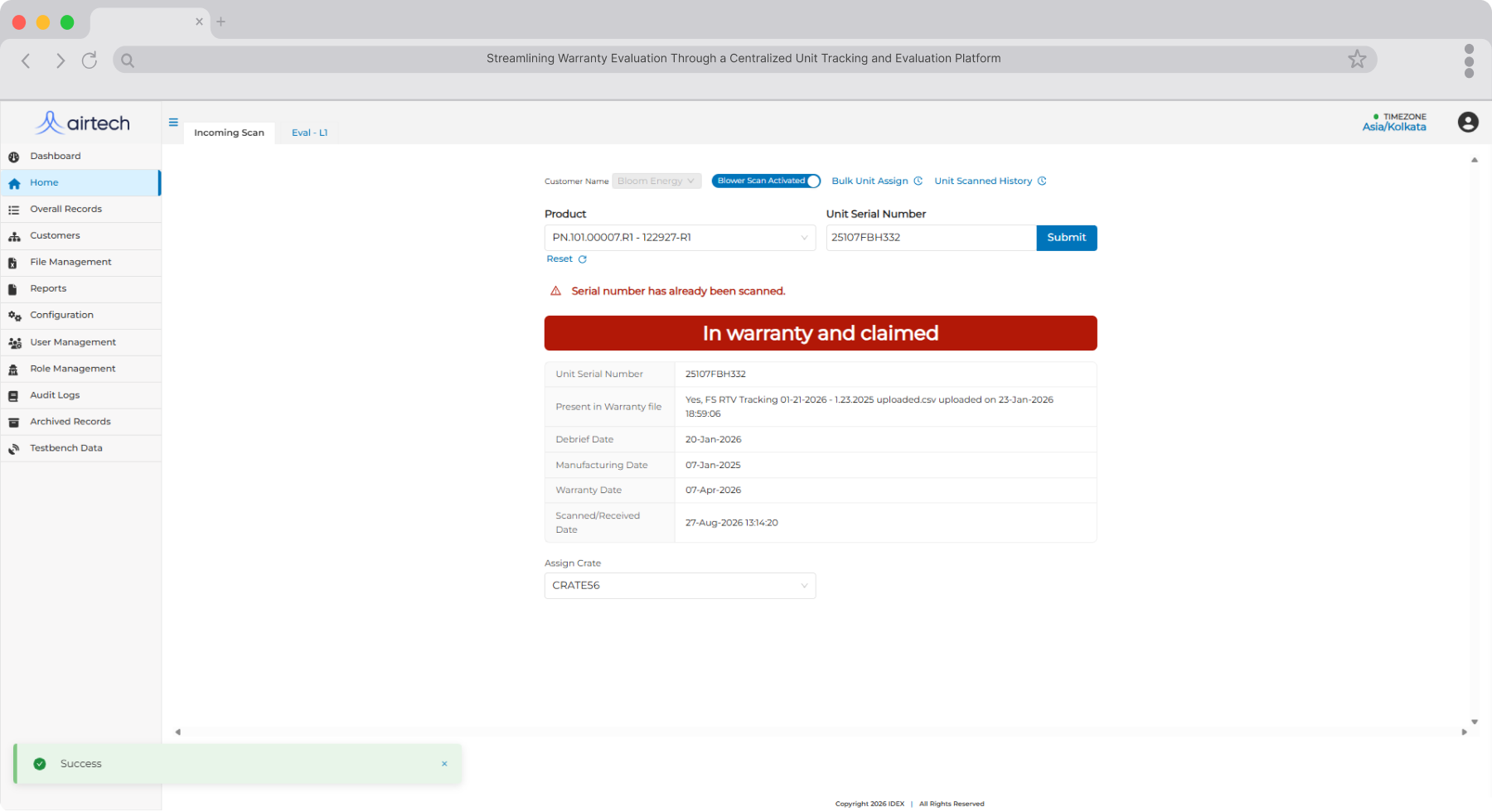
- WebaniX developed a centralized warranty evaluation platform that connects unit tracking, evaluation, warranty file management, reporting, user management, and administrative functions within one system.A structured scanning workflow was implemented to capture customer, product, and unit information as units enter the evaluation process. Crate scanning and bulk assignment capabilities allow multiple units to be associated with the appropriate crate efficiently.
- The platform organizes inspection and testing activities into a defined workflow. Teams can verify unit information, perform required safety and performance checks, record observations, and document the final evaluation outcome.
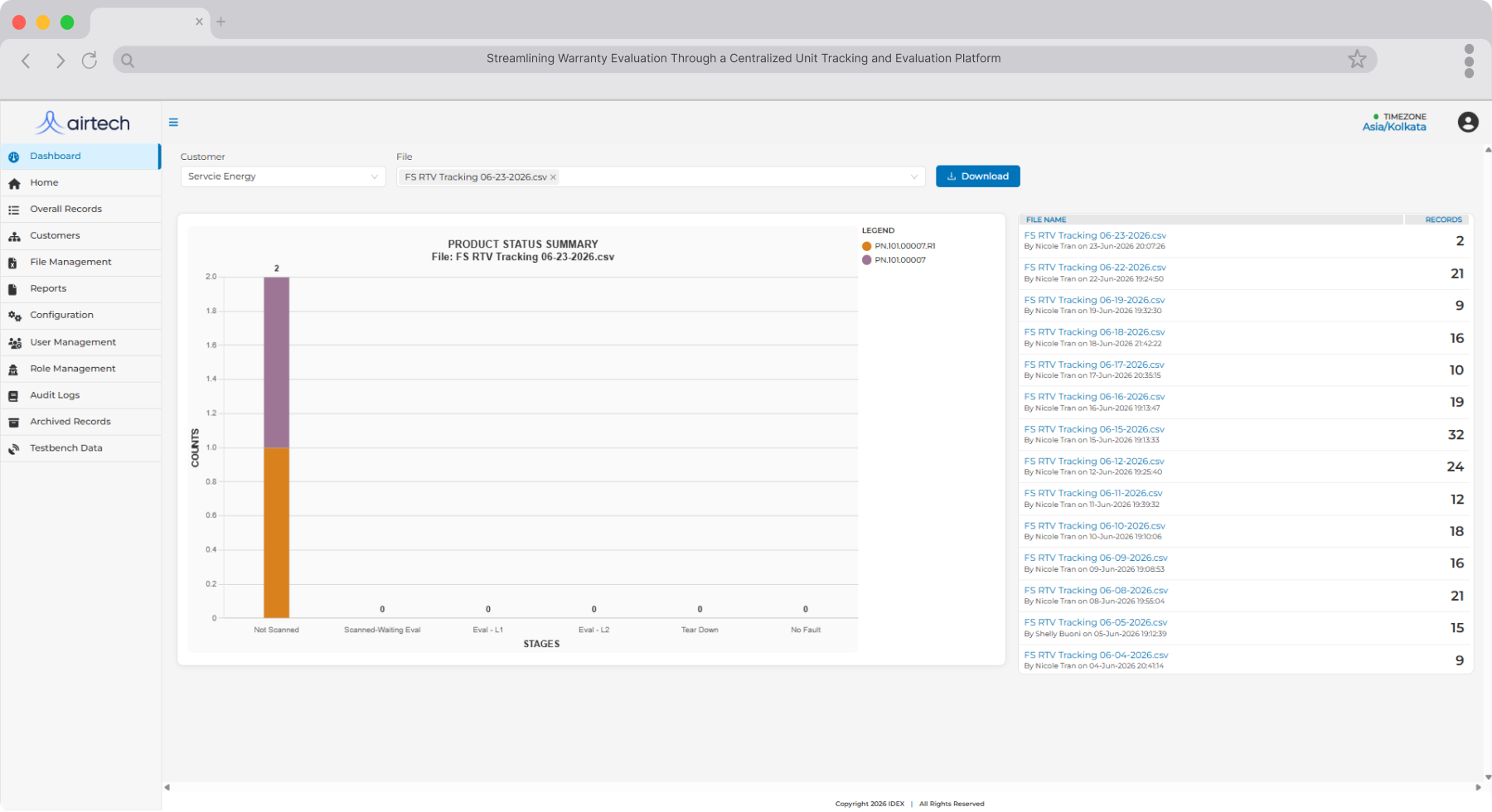
- A centralized records section provides visibility into units based on their current processing stage.Teams can quickly identify units that have been received, are waiting for evaluation, are currently being assessed, require additional investigation, have been cleared without a detected fault, or have moved to further processing.
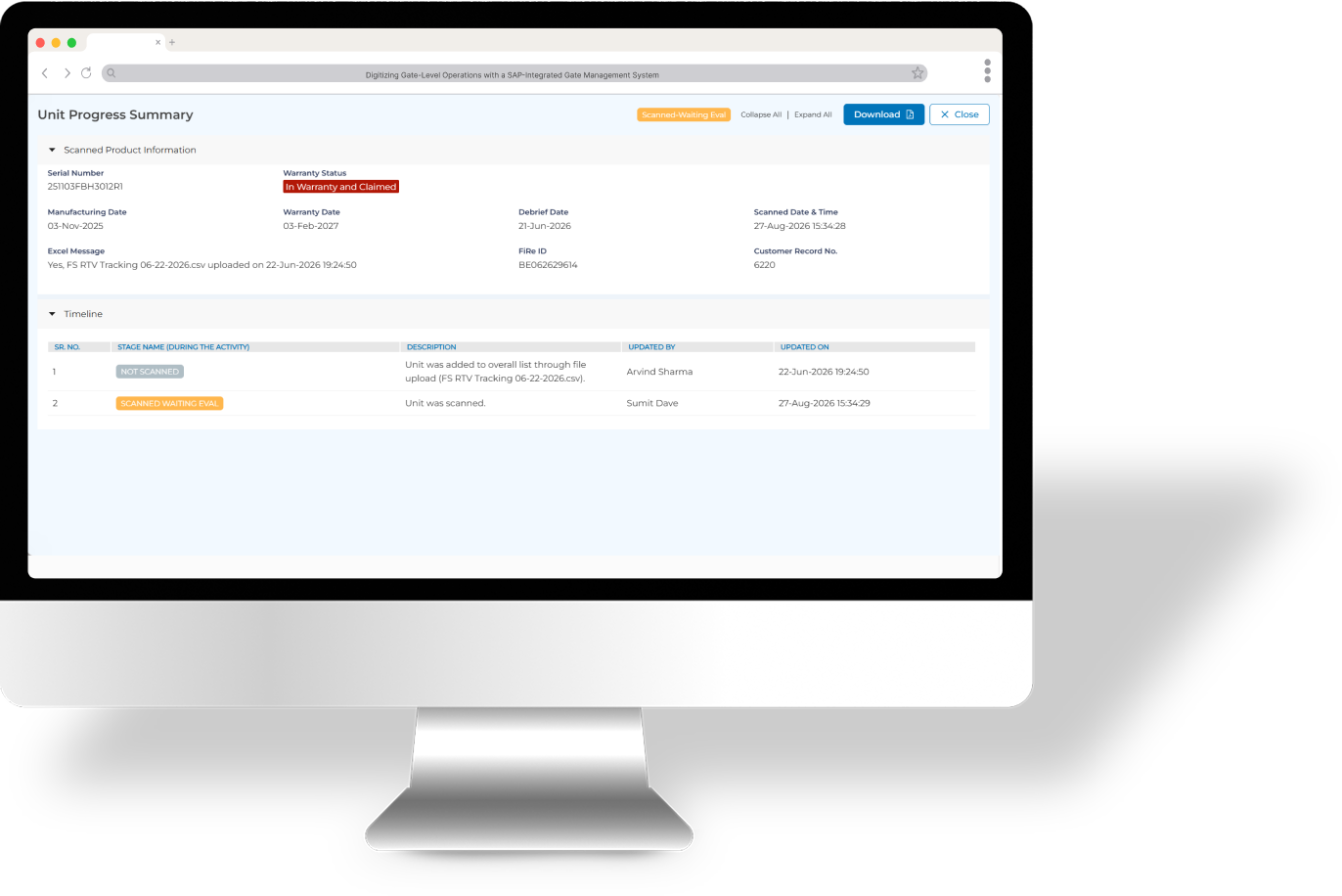
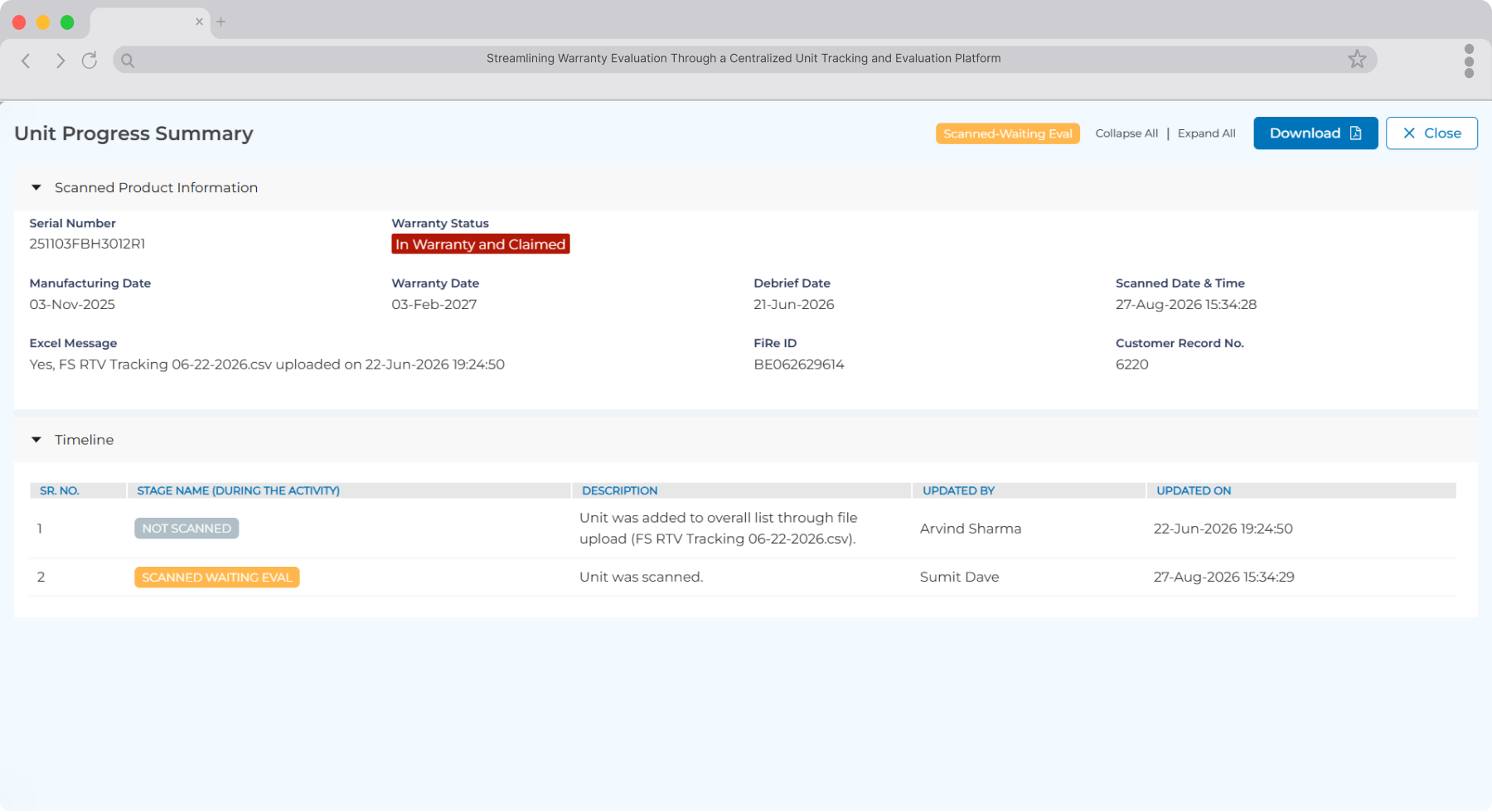
- Each unit has an activity timeline that records important actions throughout its lifecycle.Users can review what happened to a unit, which action was performed, and when the activity took place.
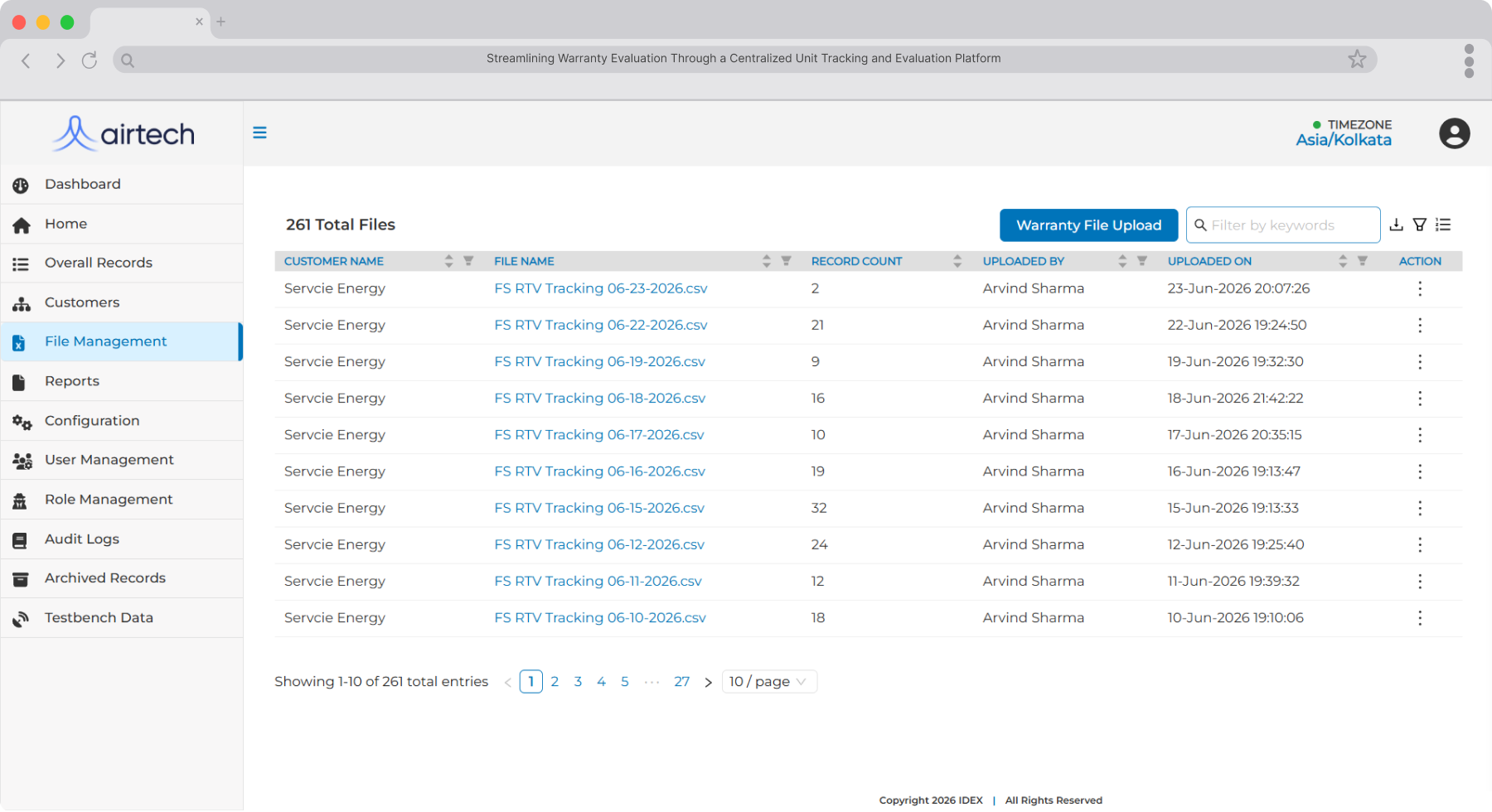
- The platform allows users to upload and manage warranty data files while maintaining associated customer information, record counts, uploader details, and upload timestamps.
- Completed evaluation records are protected from unrestricted modification. If changes are required, authorized users can move records back into an editable state through a controlled process.
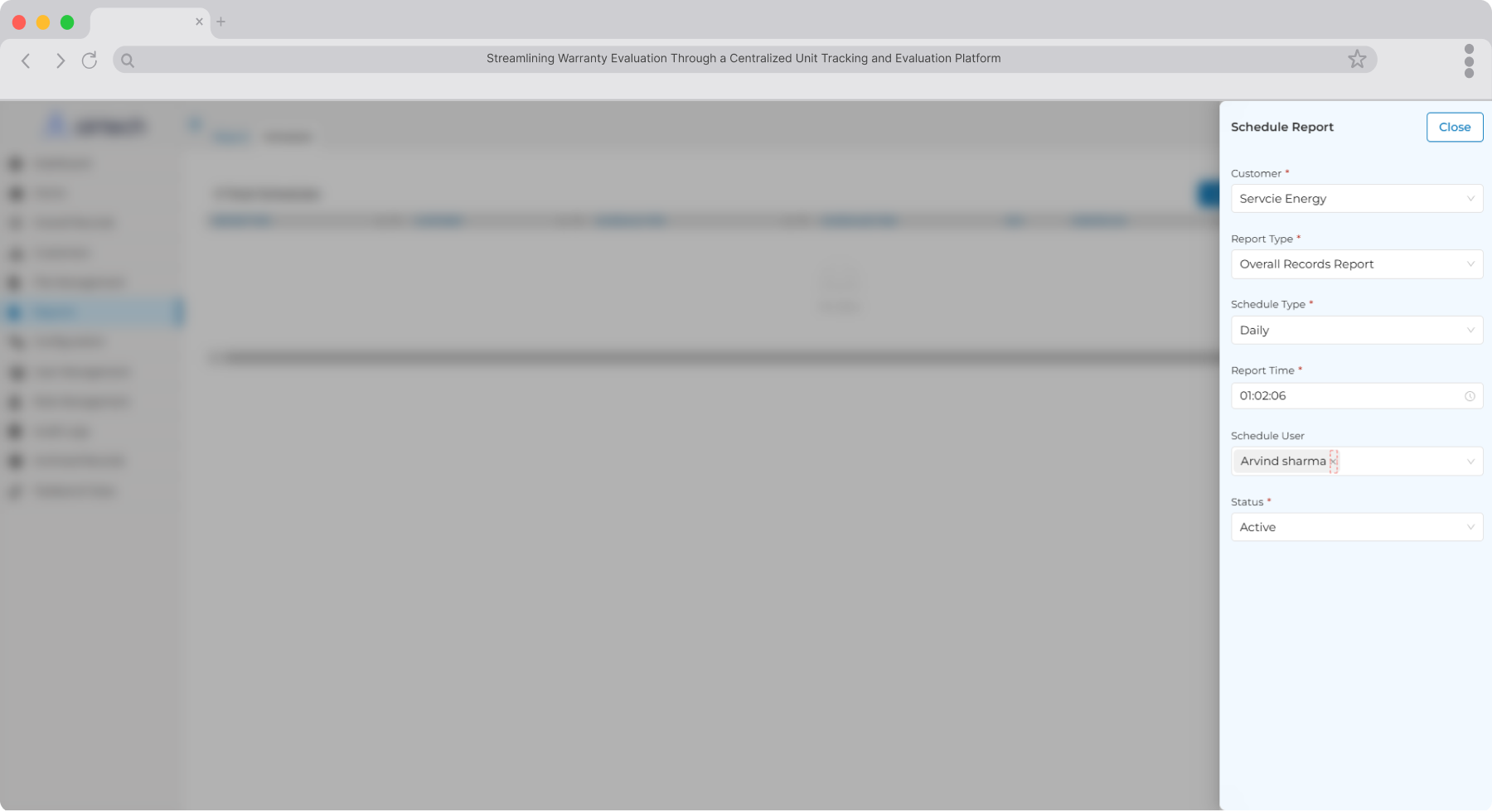
- The reporting functionality allows users to export operational records and configure recurring reports based on business requirements.
- The platform includes audit trails that capture important system activities, including users, actions, organizations, and timestamps.
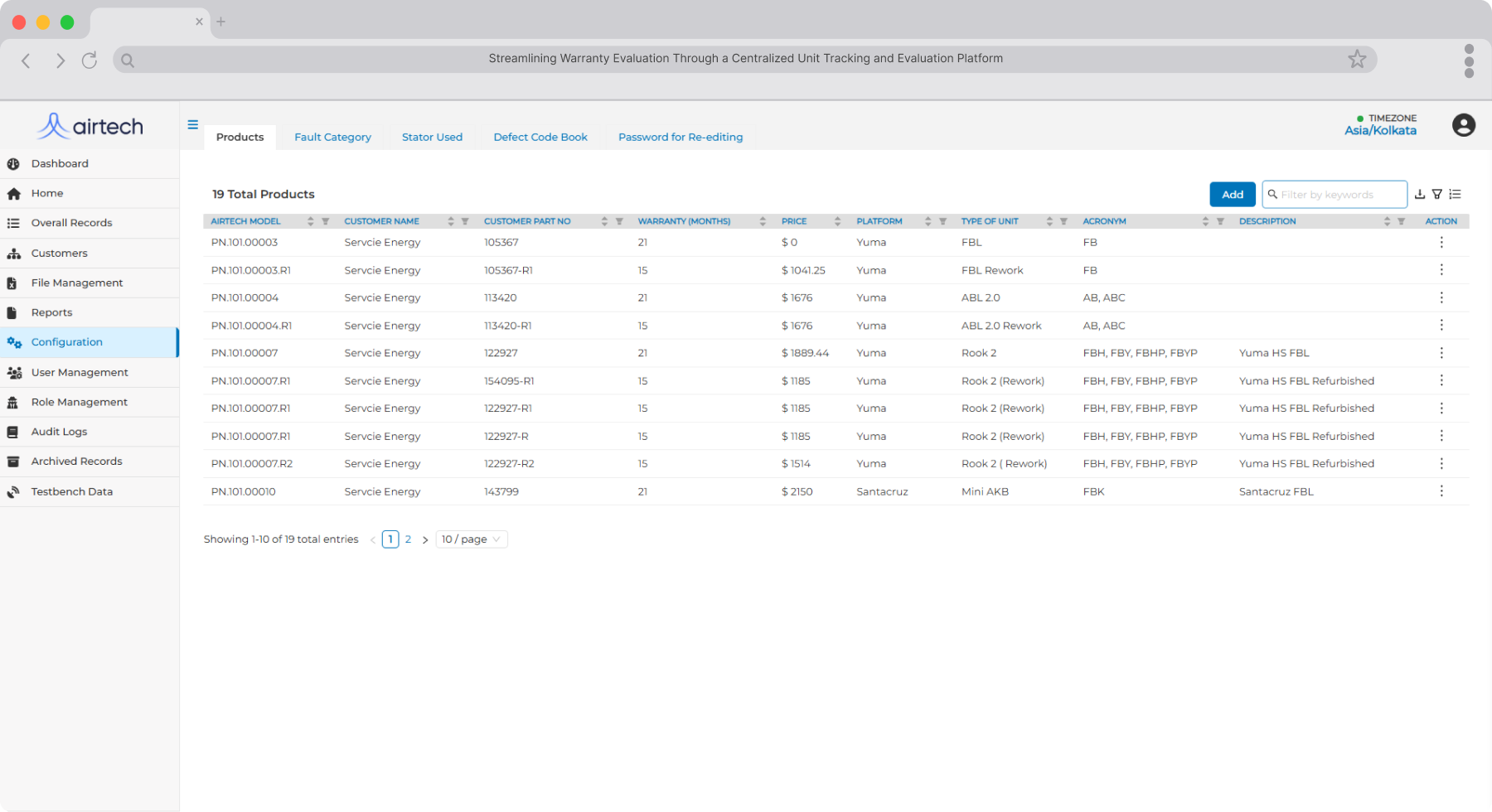
- Administrators can manage important operational information, including products, fault categories, evaluation parameters, and other system configurations.
Key Capabilities
- Centralized Warranty Management: A unified platform for managing warranty units, evaluations, files, records, reports, users, and configurations.
- Unit & Crate Scanning: Capture unit and crate information efficiently while maintaining traceability.
- End-to-End Unit Tracking: Monitor units from receipt and initial scanning through evaluation and final outcomes.
- Structured Inspection & Testing: Follow defined workflows for inspections, testing, observations, and evaluation.
- Unit Activity Timeline: Review the history of activities performed on individual units.
- Warranty File Management: Upload and manage warranty data with associated customer and record information.
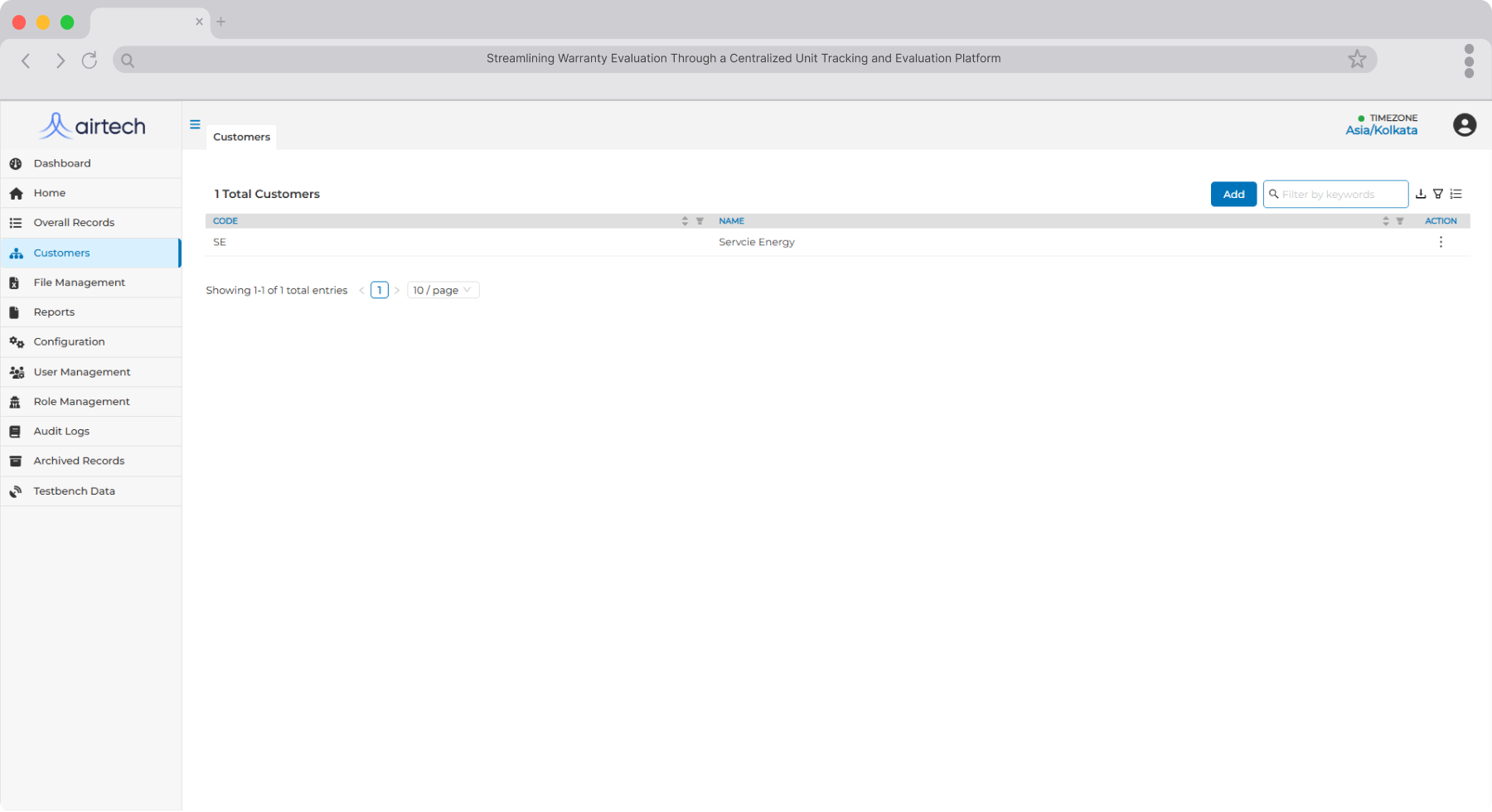
- Customer Management: Maintain customer information through a centralized customer database.
- Status-Based Record Management: View and filter units according to their current stage in the process.
- Controlled Evaluation Editing: Protect completed records while allowing authorized corrections when required.
- Archive & Restore: Move completed or inactive records to an archive while retaining the ability to restore them when needed.
- Centralized Reporting: Export operational records and manage reporting requirements from one platform.
- Scheduled Reporting: Configure recurring reports based on daily, weekly, or monthly requirements.
- Audit Trails: Maintain visibility into important system activities for accountability and traceability.
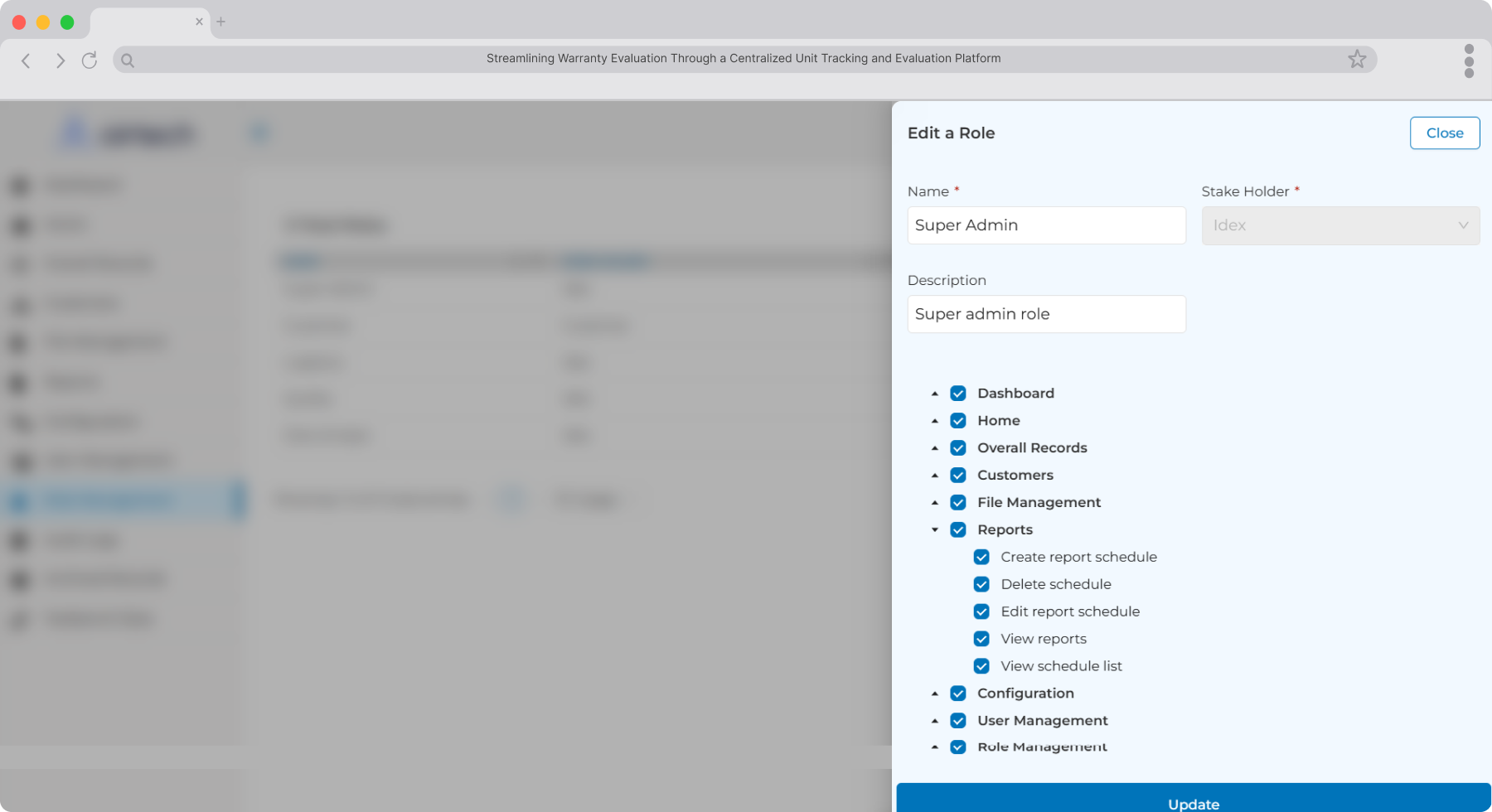
- Role-Based Access: Control access to different areas of the platform according to user responsibilities.
- Configurable Operations: Manage products, fault categories, evaluation parameters, and other operational settings centrally.
Key Capabilities
- SAP-Integrated Order Processing: All orders—B2B and B2C—flowed into SAP in real time.
- Fast & Seamless Digital Experience: Optimized checkout and order management workflows
- Distributor-Friendly Architecture: Ensured channel harmony while expanding digital reach

Measurable Business Impact
The implementation of the centralized warranty evaluation platform created a more connected and structured approach to managing warranty units.
Operational Efficiency
Previously disconnected activities such as unit scanning, crate assignment, inspection, testing, evaluation, and reporting are now organized within a connected digital workflow.This gives teams a consistent process to follow and reduces dependency on scattered operational records.
Service Visibility
The centralized records system and activity timeline provide teams with greater visibility into the status and history of individual units. Users can identify where a unit is within the evaluation process and review the activities associated with it, supporting better coordination and accountability.
Customer Experience
The structured evaluation workflow brings multiple inspection and testing activities together in one environment. Controlled editing of completed records also helps protect the accuracy and integrity of evaluation information.
UI Designs
The platform interface was designed around the operational flow of warranty unit management and evaluation.
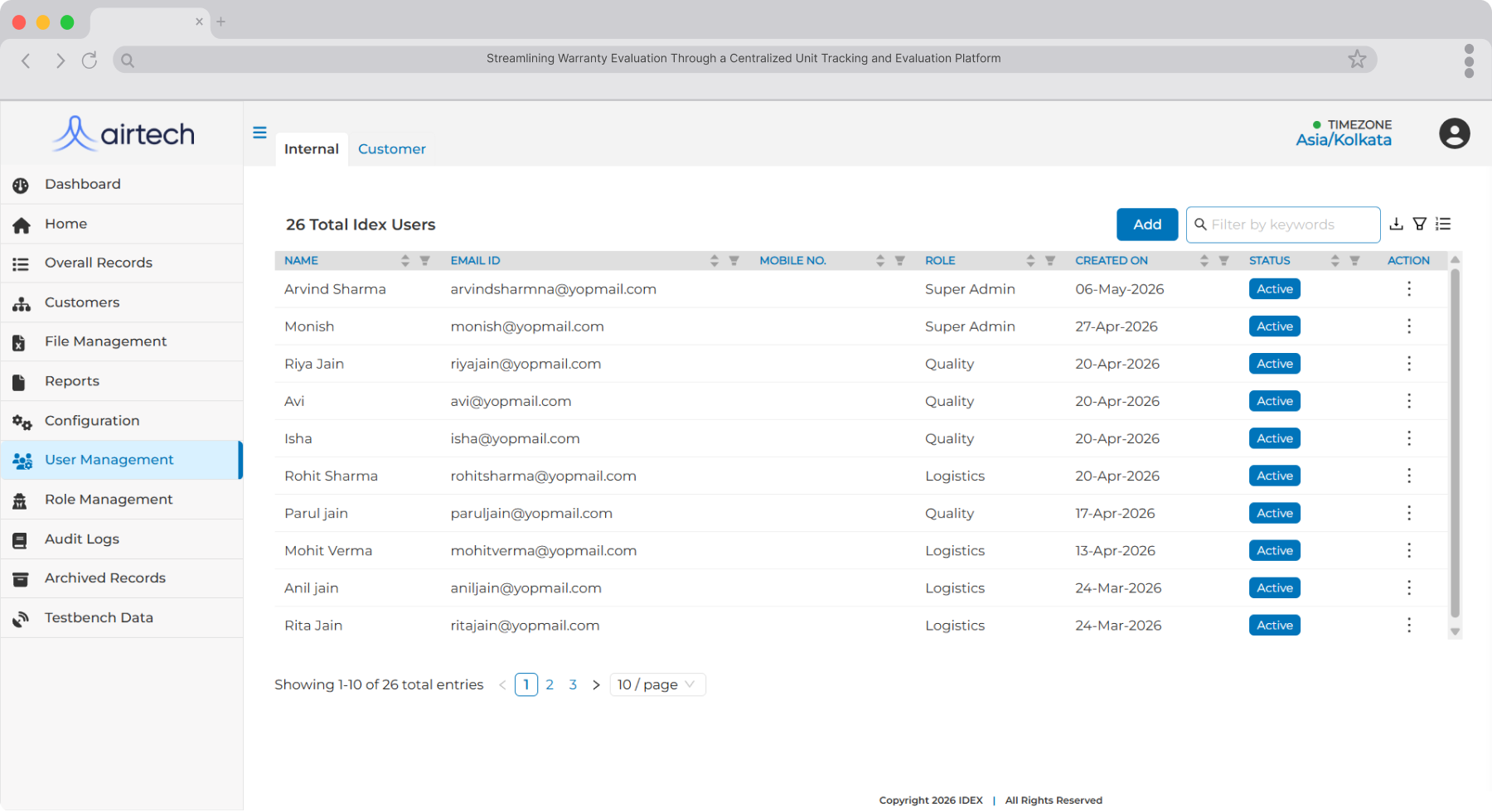
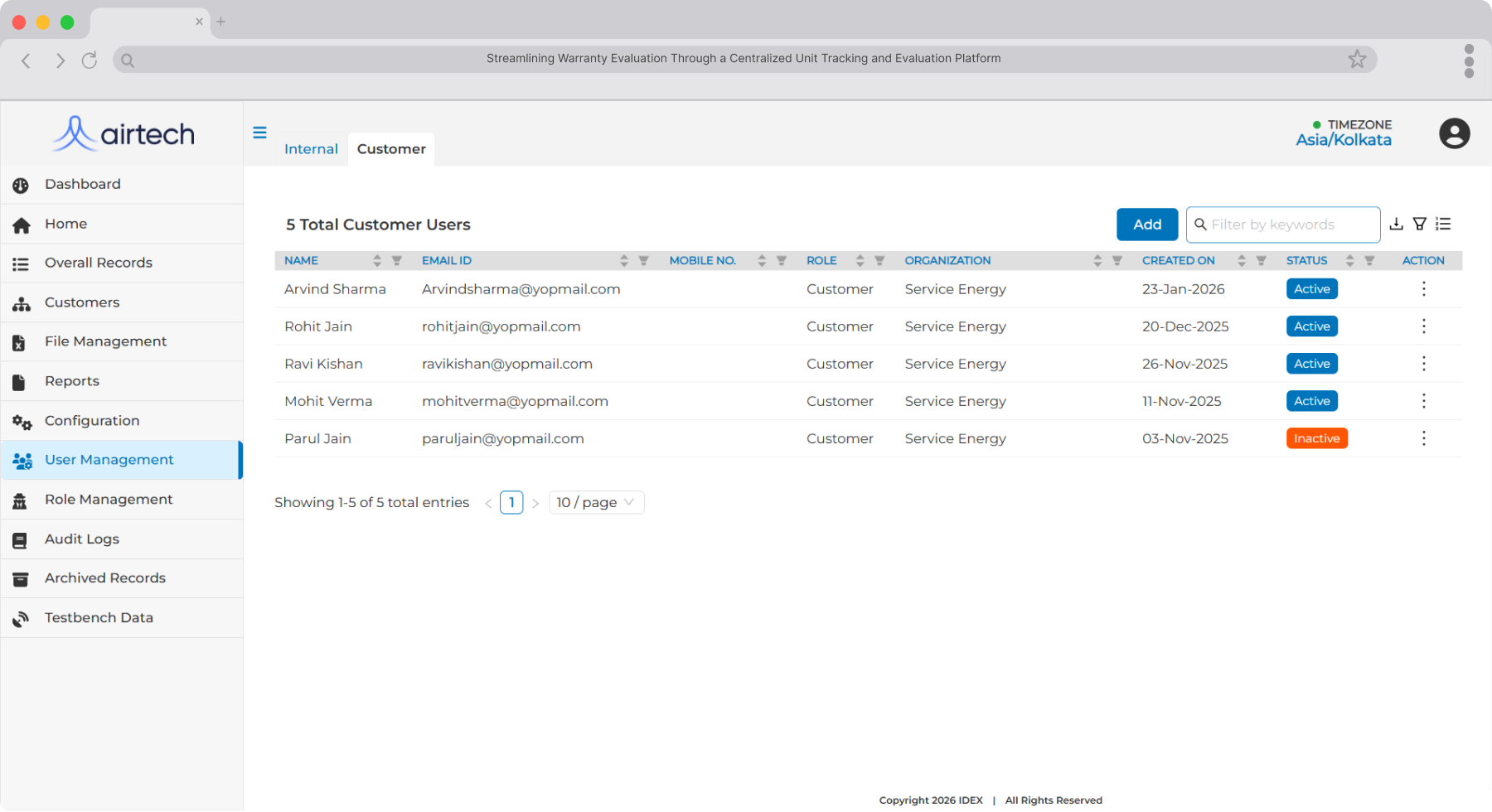
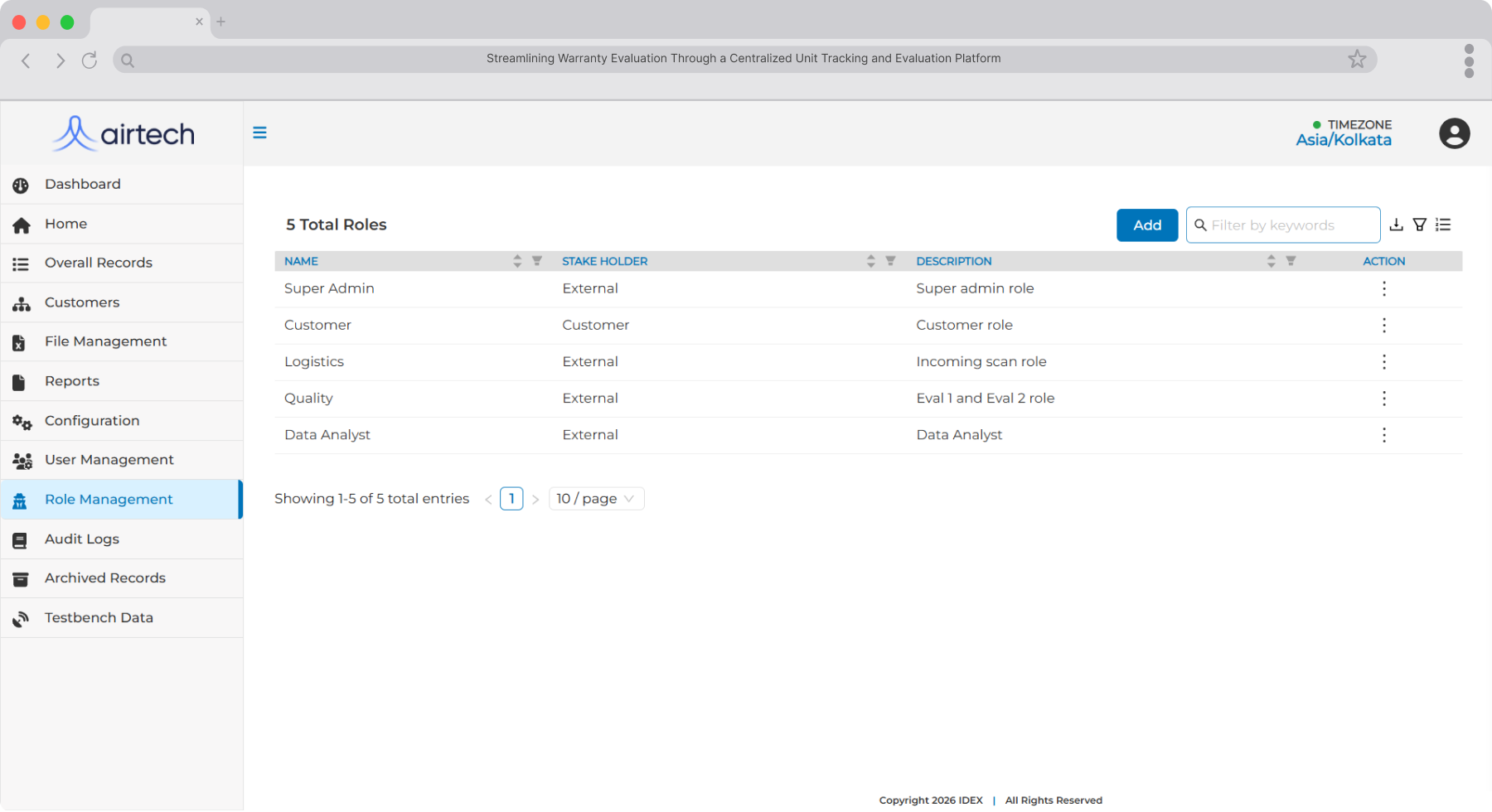
The dashboard provides an overview of unit and product-related information, while the main workflow supports incoming unit and crate scanning. Dedicated sections allow teams to manage customers, warranty files, unit records, evaluations, archives, reports, audit activities, users, roles, and system configurations.
The records interface provides stage-based visibility into units, while the activity timeline allows users to review the history of individual units.
Administrative interfaces provide additional control over user permissions, products, fault categories, evaluation parameters, and other configurable information.
The overall interface focuses on making a complex operational process easier to navigate while ensuring that important information remains accessible to the appropriate users.
Strategic Outcome
The implementation transformed warranty unit management from a collection of individual activities into a connected digital workflow.
Teams gained a centralized environment for capturing incoming unit information, managing warranty files, conducting inspections and evaluations, tracking unit status, reviewing historical activities, managing records, generating reports, and administering user access.
The platform also strengthened operational control through role-based permissions, audit trails, controlled record editing, and configurable system settings.
By connecting unit tracking, evaluation, record management, reporting, and administration within one platform, the solution established a more transparent, traceable, and organized approach to warranty evaluation operations.
The Biggest Win
The biggest win was creating one connected system for the complete warranty evaluation lifecycle.
Instead of managing unit information, warranty files, evaluations, records, reporting, and administrative activities across disconnected processes, teams can now manage them within a centralized platform.
Every unit can be tracked from the point it enters the system through its inspection, testing, evaluation, and final outcome. Its associated information and activity history remain accessible throughout the process.
For the organization, this means better visibility, stronger traceability, more controlled data management, and a more consistent way to manage warranty evaluation operations at scale.
Technology Stack & Delivery
Technology

React.js

Node.js with REST APIs
Integrated Workflow Automation System
Delivery Timeline

20 Weeks
Confidentiality

Masked